Motivated Skepticism
People scrutinize info that conflicts with their beliefs, accepting what fits them easily. A psychological tendency to doubt uncomfortable truths while trusting familiar ones.
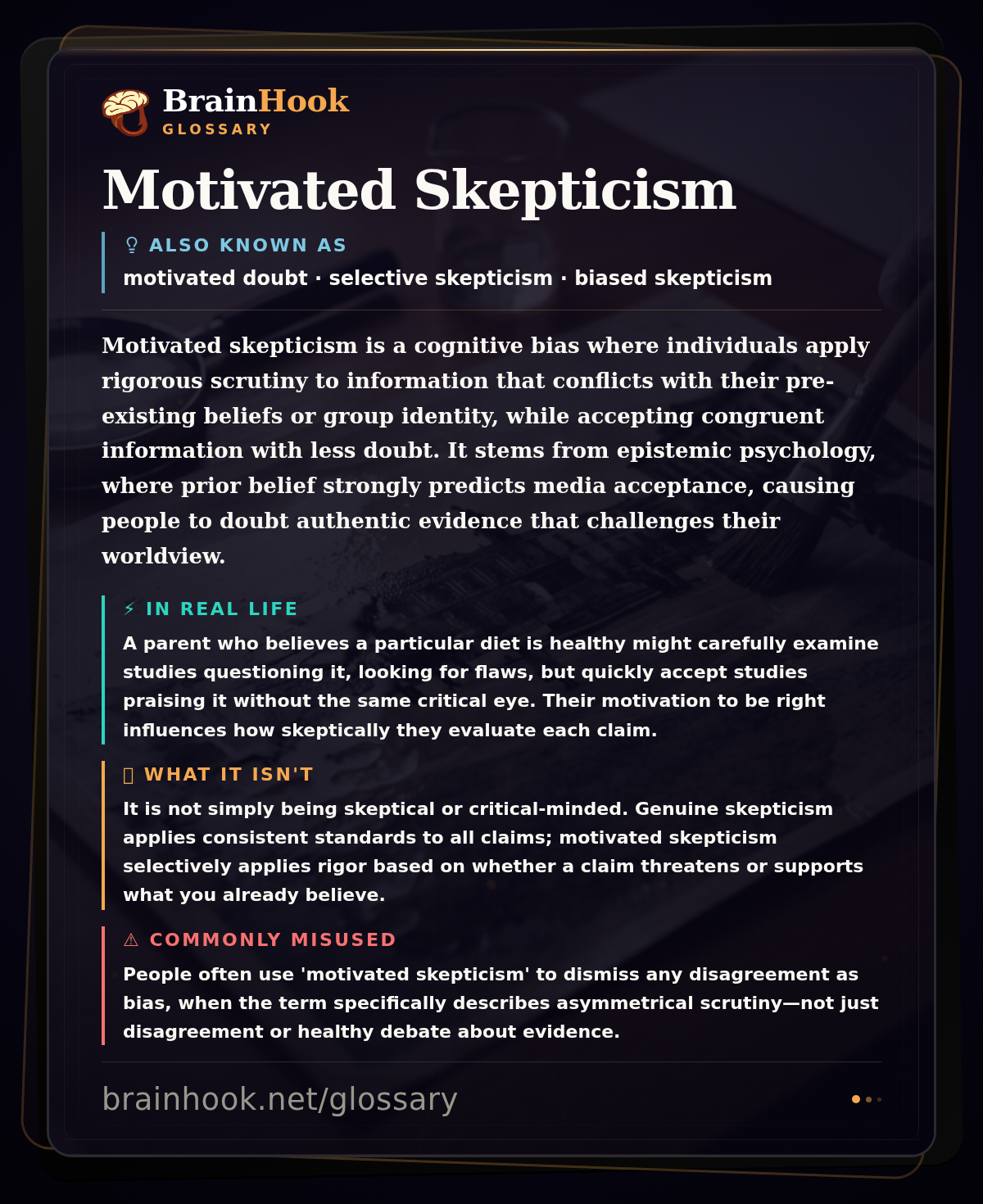
Motivated skepticism is a cognitive bias where individuals apply rigorous scrutiny to information that conflicts with their pre-existing beliefs or group identity, while accepting congruent information with less doubt. It stems from epistemic psychology, where prior belief strongly predicts media acceptance, causing people to doubt authentic evidence that challenges their worldview.
What this means in real life
A parent who believes a particular diet is healthy might carefully examine studies questioning it, looking for flaws, but quickly accept studies praising it without the same critical eye. Their motivation to be right influences how skeptically they evaluate each claim.
What it isn’t
It is not simply being skeptical or critical-minded. Genuine skepticism applies consistent standards to all claims; motivated skepticism selectively applies rigor based on whether a claim threatens or supports what you already believe.
Commonly misused online
People often use 'motivated skepticism' to dismiss any disagreement as bias, when the term specifically describes asymmetrical scrutiny—not just disagreement or healthy debate about evidence.