Microbial Metabolites
Microbial metabolites are tiny molecules microbes like bacteria make during growth—ranging from helpful vitamins and signals to odorants or antibiotics that shape skin and gut health.
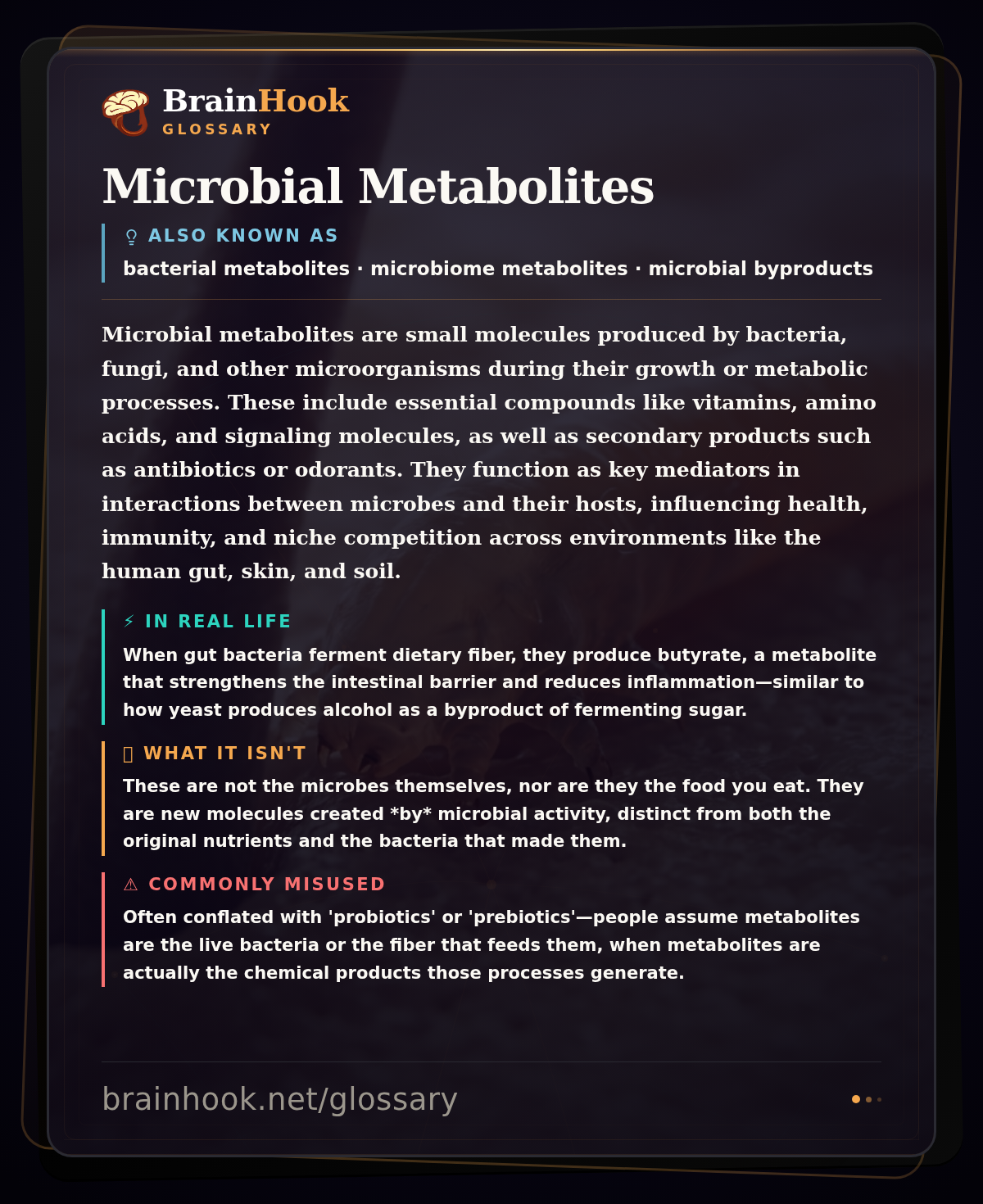
Microbial metabolites are small molecules produced by bacteria, fungi, and other microorganisms during their growth or metabolic processes. These include essential compounds like vitamins, amino acids, and signaling molecules, as well as secondary products such as antibiotics or odorants. They function as key mediators in interactions between microbes and their hosts, influencing health, immunity, and niche competition across environments like the human gut, skin, and soil.
What this means in real life
When gut bacteria ferment dietary fiber, they produce butyrate, a metabolite that strengthens the intestinal barrier and reduces inflammation—similar to how yeast produces alcohol as a byproduct of fermenting sugar.
What it isn’t
These are not the microbes themselves, nor are they the food you eat. They are new molecules created *by* microbial activity, distinct from both the original nutrients and the bacteria that made them.
Commonly misused online
Often conflated with 'probiotics' or 'prebiotics'—people assume metabolites are the live bacteria or the fiber that feeds them, when metabolites are actually the chemical products those processes generate.