Memory Consolidation
Memory consolidation is the brain's way of stabilizing fresh memories into long-term storage, often happening while you sleep. It separates emotional weight from facts, reprocessing experiences so they stick clearly without distortion.
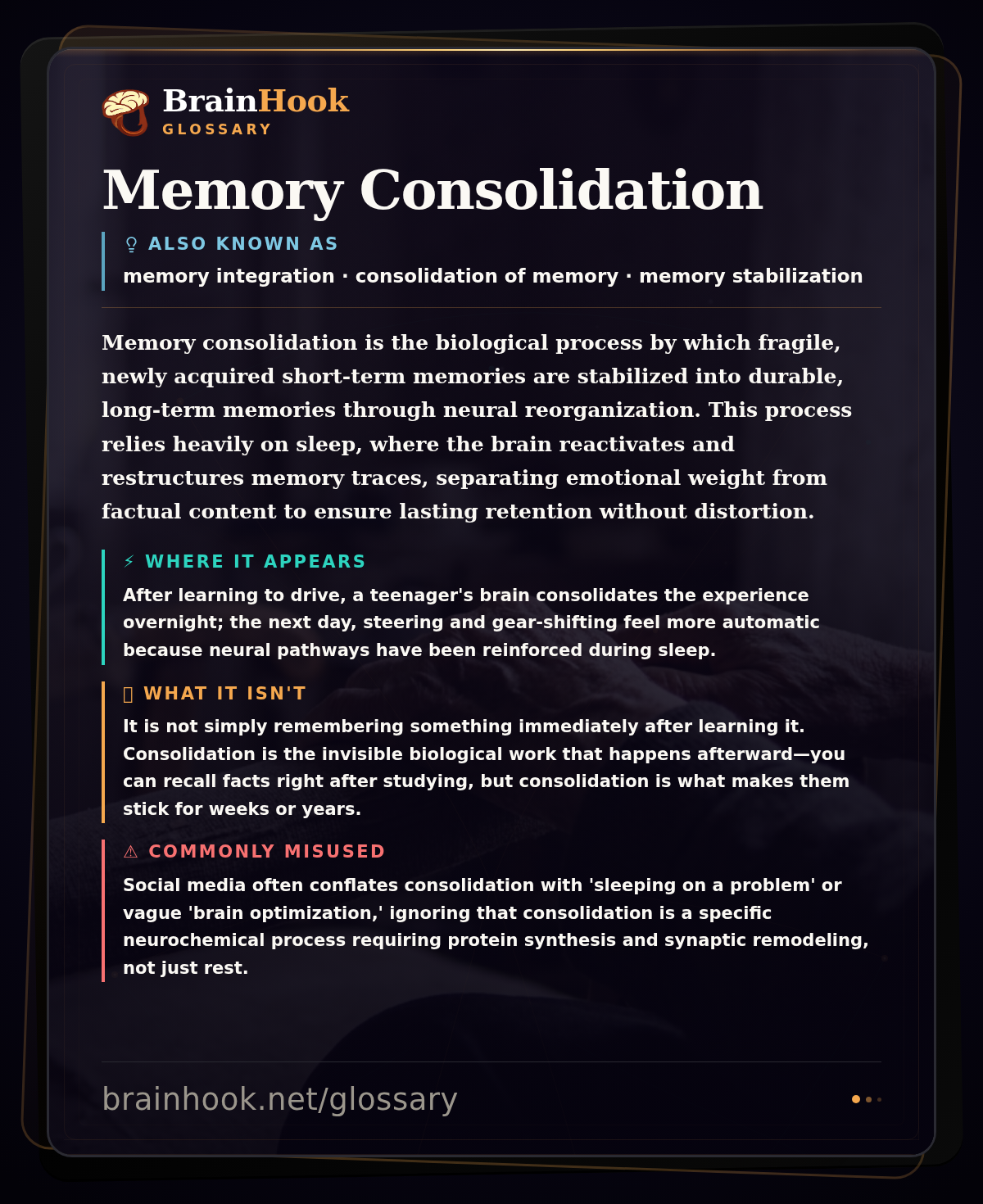
Memory consolidation is the biological process by which fragile, newly acquired short-term memories are stabilized into durable, long-term memories through neural reorganization. This process relies heavily on sleep, where the brain reactivates and restructures memory traces, separating emotional weight from factual content to ensure lasting retention without distortion.
What this means in real life
After learning to drive, a teenager's brain consolidates the experience overnight; the next day, steering and gear-shifting feel more automatic because neural pathways have been reinforced during sleep.
What it isn’t
It is not simply remembering something immediately after learning it. Consolidation is the invisible biological work that happens afterward—you can recall facts right after studying, but consolidation is what makes them stick for weeks or years.
Commonly misused online
Social media often conflates consolidation with 'sleeping on a problem' or vague 'brain optimization,' ignoring that consolidation is a specific neurochemical process requiring protein synthesis and synaptic remodeling, not just rest.