Media Effects
Media effects describe how exposure to news or digital content reshapes what people know, believe, or feel—sometimes feeding misperceptions rather than better informing them. Certain sources, like talk radio or specific news sites, are linked to larger perception gaps in their audiences.
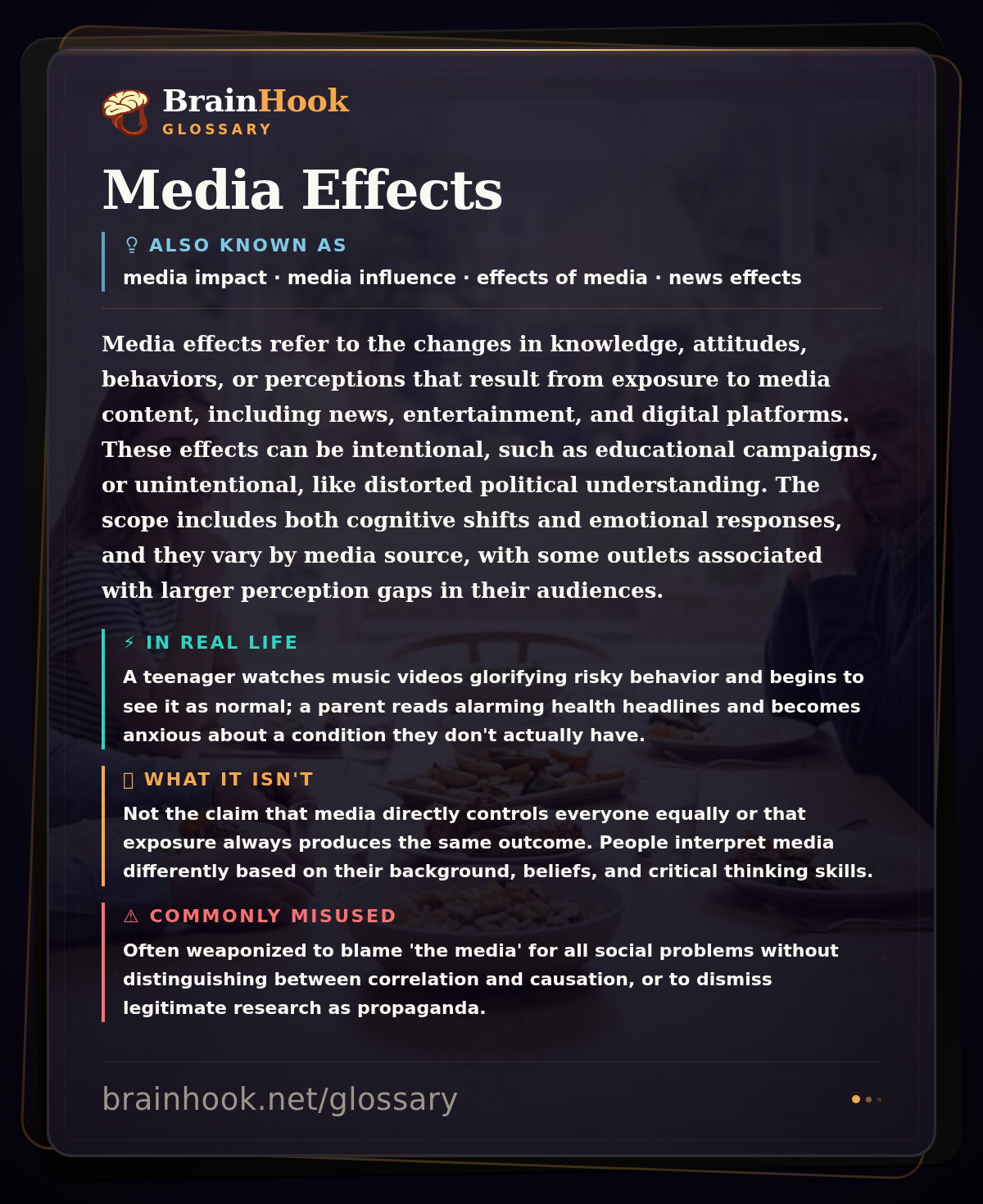
Media effects refer to the changes in knowledge, attitudes, behaviors, or perceptions that result from exposure to media content, including news, entertainment, and digital platforms. These effects can be intentional, such as educational campaigns, or unintentional, like distorted political understanding. The scope includes both cognitive shifts and emotional responses, and they vary by media source, with some outlets associated with larger perception gaps in their audiences.
What this means in real life
A teenager watches music videos glorifying risky behavior and begins to see it as normal; a parent reads alarming health headlines and becomes anxious about a condition they don't actually have.
What it isn’t
Not the claim that media directly controls everyone equally or that exposure always produces the same outcome. People interpret media differently based on their background, beliefs, and critical thinking skills.
Commonly misused online
Often weaponized to blame 'the media' for all social problems without distinguishing between correlation and causation, or to dismiss legitimate research as propaganda.
Based on 1 reference source, including primary sources. Last verified July 12, 2026.