Interagency Data-sharing Agreements
Formal contracts between government agencies that define how they securely exchange and use data together, ensuring compliance and coordination across departments.
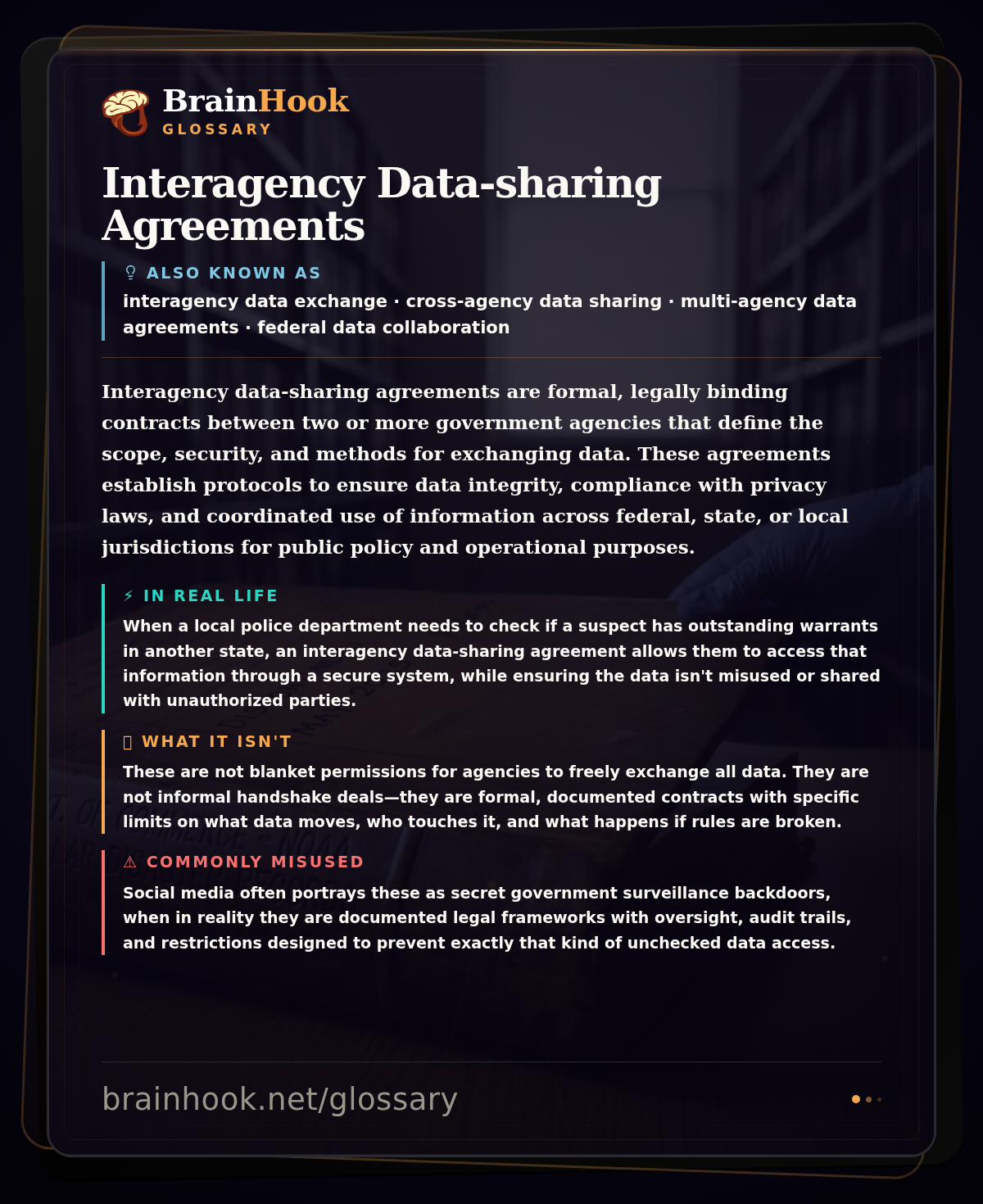
Interagency data-sharing agreements are formal, legally binding contracts between two or more government agencies that define the scope, security, and methods for exchanging data. These agreements establish protocols to ensure data integrity, compliance with privacy laws, and coordinated use of information across federal, state, or local jurisdictions for public policy and operational purposes.
What this means in real life
When a local police department needs to check if a suspect has outstanding warrants in another state, an interagency data-sharing agreement allows them to access that information through a secure system, while ensuring the data isn't misused or shared with unauthorized parties.
What it isn’t
These are not blanket permissions for agencies to freely exchange all data. They are not informal handshake deals—they are formal, documented contracts with specific limits on what data moves, who touches it, and what happens if rules are broken.
Commonly misused online
Social media often portrays these as secret government surveillance backdoors, when in reality they are documented legal frameworks with oversight, audit trails, and restrictions designed to prevent exactly that kind of unchecked data access.