Hygiene Hypothesis
The hygiene hypothesis suggests that reduced microbial exposure in early life leads to increased allergies, asthma, and autoimmune issues. It argues that the immune system needs diverse microbes to develop correctly.
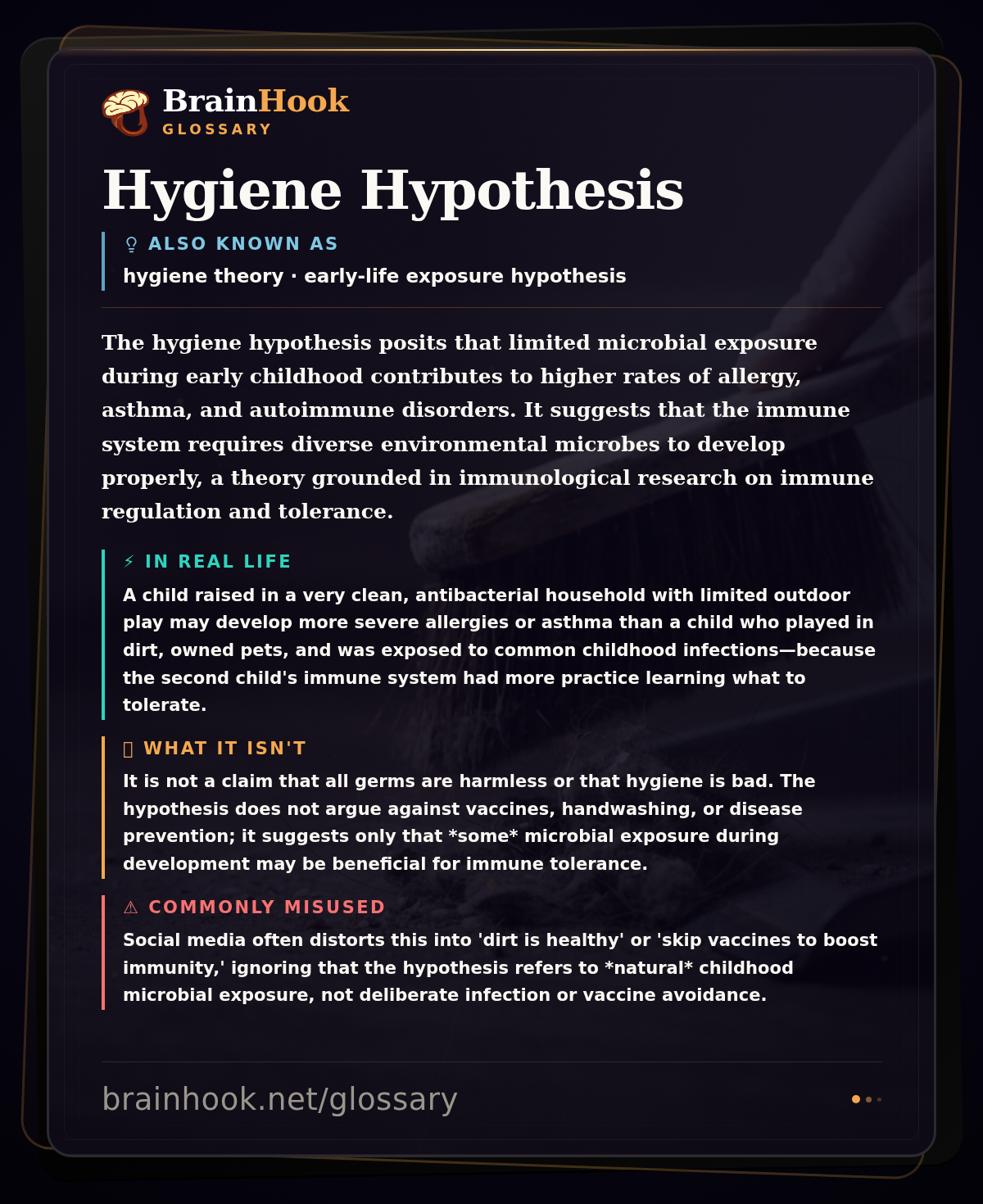
The hygiene hypothesis posits that limited microbial exposure during early childhood contributes to higher rates of allergy, asthma, and autoimmune disorders. It suggests that the immune system requires diverse environmental microbes to develop properly, a theory grounded in immunological research on immune regulation and tolerance.
What this means in real life
A child raised in a very clean, antibacterial household with limited outdoor play may develop more severe allergies or asthma than a child who played in dirt, owned pets, and was exposed to common childhood infections—because the second child's immune system had more practice learning what to tolerate.
What it isn’t
It is not a claim that all germs are harmless or that hygiene is bad. The hypothesis does not argue against vaccines, handwashing, or disease prevention; it suggests only that *some* microbial exposure during development may be beneficial for immune tolerance.
Commonly misused online
Social media often distorts this into 'dirt is healthy' or 'skip vaccines to boost immunity,' ignoring that the hypothesis refers to *natural* childhood microbial exposure, not deliberate infection or vaccine avoidance.