Horizontal Gene Transfer
Horizontal gene transfer lets bacteria swap genes like trading cards, acquiring traits such as antibiotic resistance directly from unrelated neighbors. This rapid sharing accelerates adaptation across species without the need for reproduction.
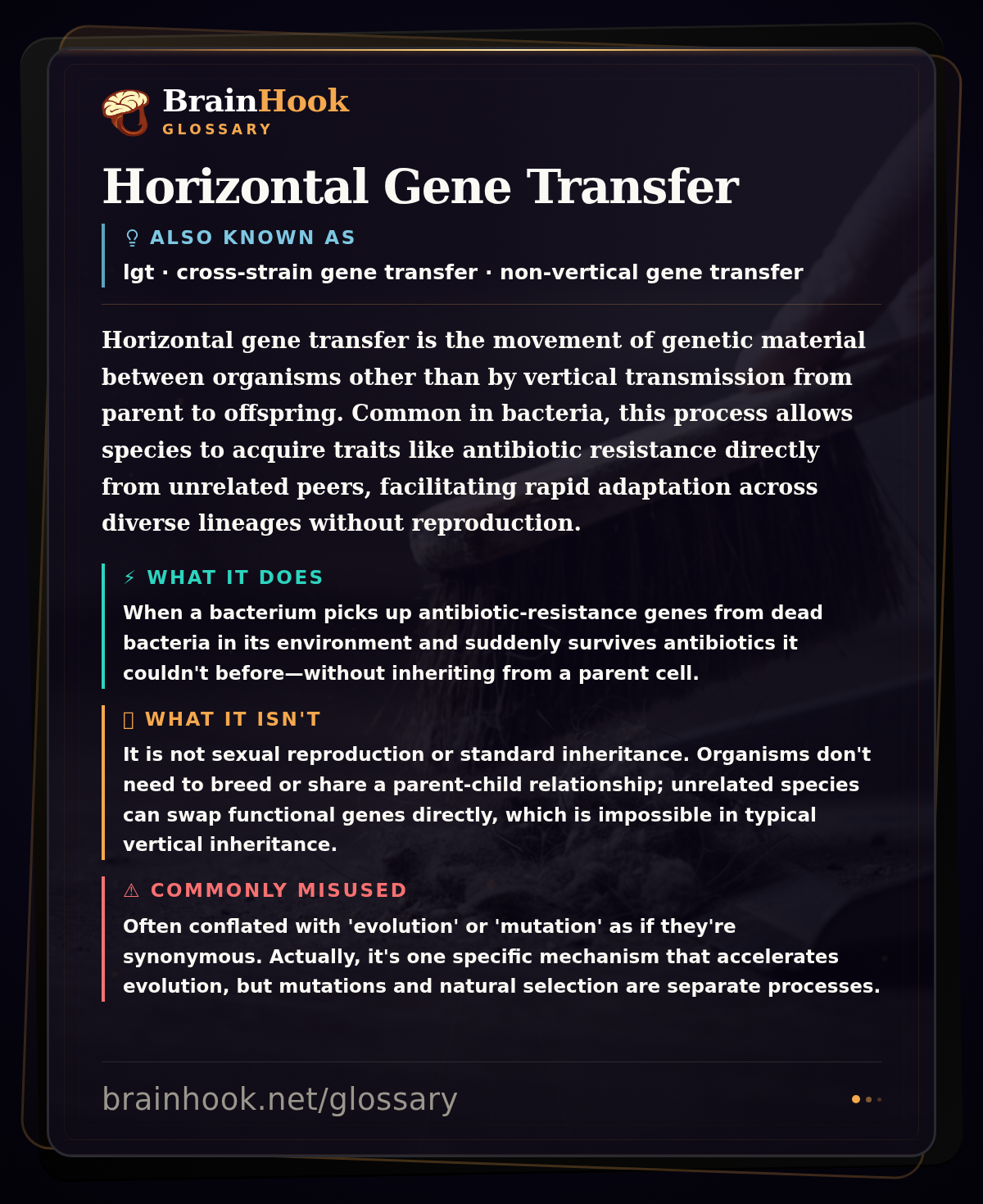
Horizontal gene transfer is the movement of genetic material between organisms other than by vertical transmission from parent to offspring. Common in bacteria, this process allows species to acquire traits like antibiotic resistance directly from unrelated peers, facilitating rapid adaptation across diverse lineages without reproduction.
What this means in real life
When a bacterium picks up antibiotic-resistance genes from dead bacteria in its environment and suddenly survives antibiotics it couldn't before—without inheriting from a parent cell.
What it isn’t
It is not sexual reproduction or standard inheritance. Organisms don't need to breed or share a parent-child relationship; unrelated species can swap functional genes directly, which is impossible in typical vertical inheritance.
Commonly misused online
Often conflated with 'evolution' or 'mutation' as if they're synonymous. Actually, it's one specific mechanism that accelerates evolution, but mutations and natural selection are separate processes.
Based on 2 reference sources, including primary sources. Last verified July 12, 2026.