Hippocampal Neurogenesis
The process of creating new neurons in the hippocampus, a brain area vital for memory and mood. Burnout and stress can impair this slow, specific cellular growth, reducing cognitive flexibility.
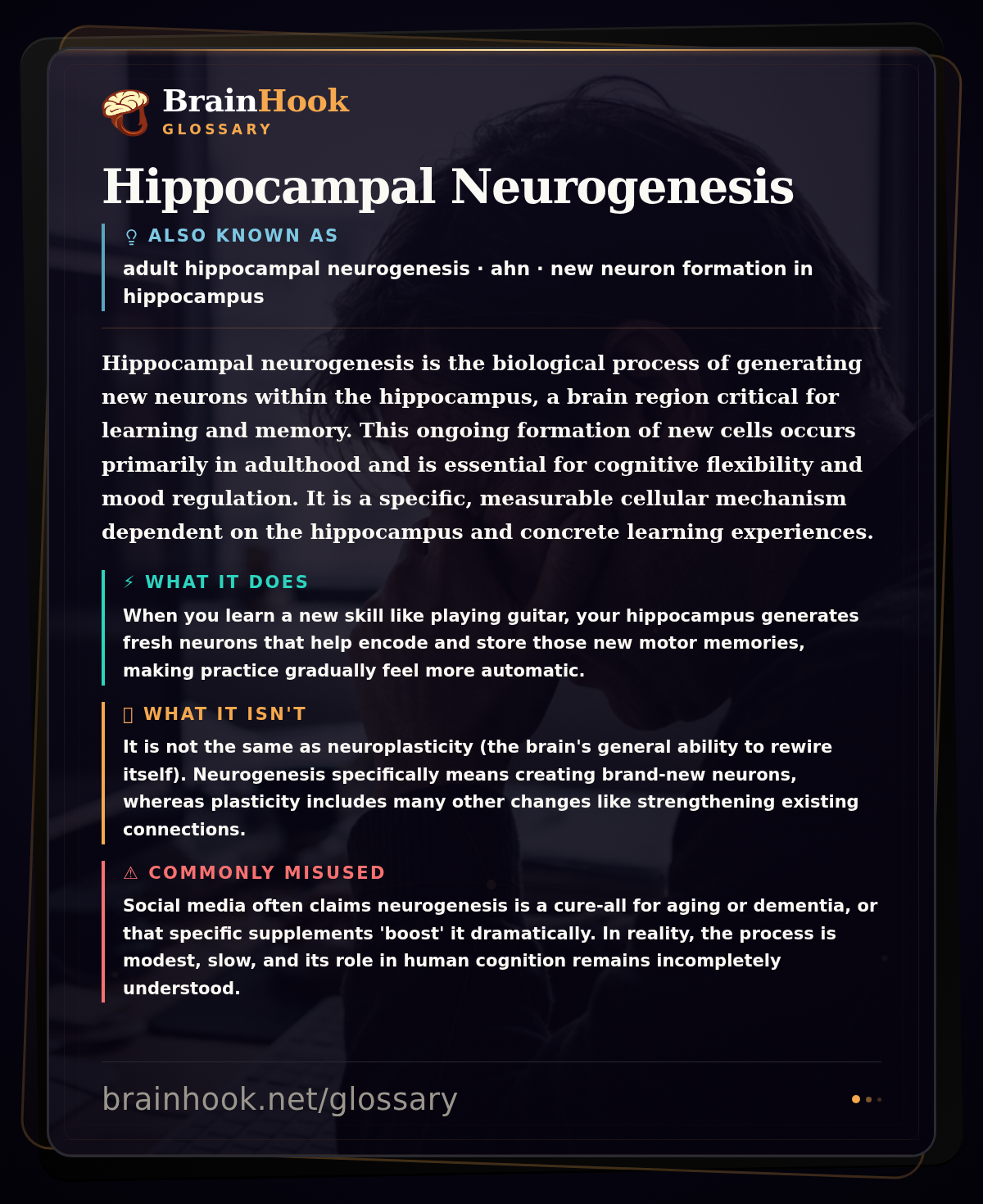
Hippocampal neurogenesis is the biological process of generating new neurons within the hippocampus, a brain region critical for learning and memory. This ongoing formation of new cells occurs primarily in adulthood and is essential for cognitive flexibility and mood regulation. It is a specific, measurable cellular mechanism dependent on the hippocampus and concrete learning experiences.
What this means in real life
When you learn a new skill like playing guitar, your hippocampus generates fresh neurons that help encode and store those new motor memories, making practice gradually feel more automatic.
What it isn’t
It is not the same as neuroplasticity (the brain's general ability to rewire itself). Neurogenesis specifically means creating brand-new neurons, whereas plasticity includes many other changes like strengthening existing connections.
Commonly misused online
Social media often claims neurogenesis is a cure-all for aging or dementia, or that specific supplements 'boost' it dramatically. In reality, the process is modest, slow, and its role in human cognition remains incompletely understood.