First-degree Price Discrimination
This is when a seller charges every single buyer their exact maximum price, capturing all consumer surplus. In practice, it relies on algorithmic intermediaries harvesting granular data to estimate individual willingness to pay.
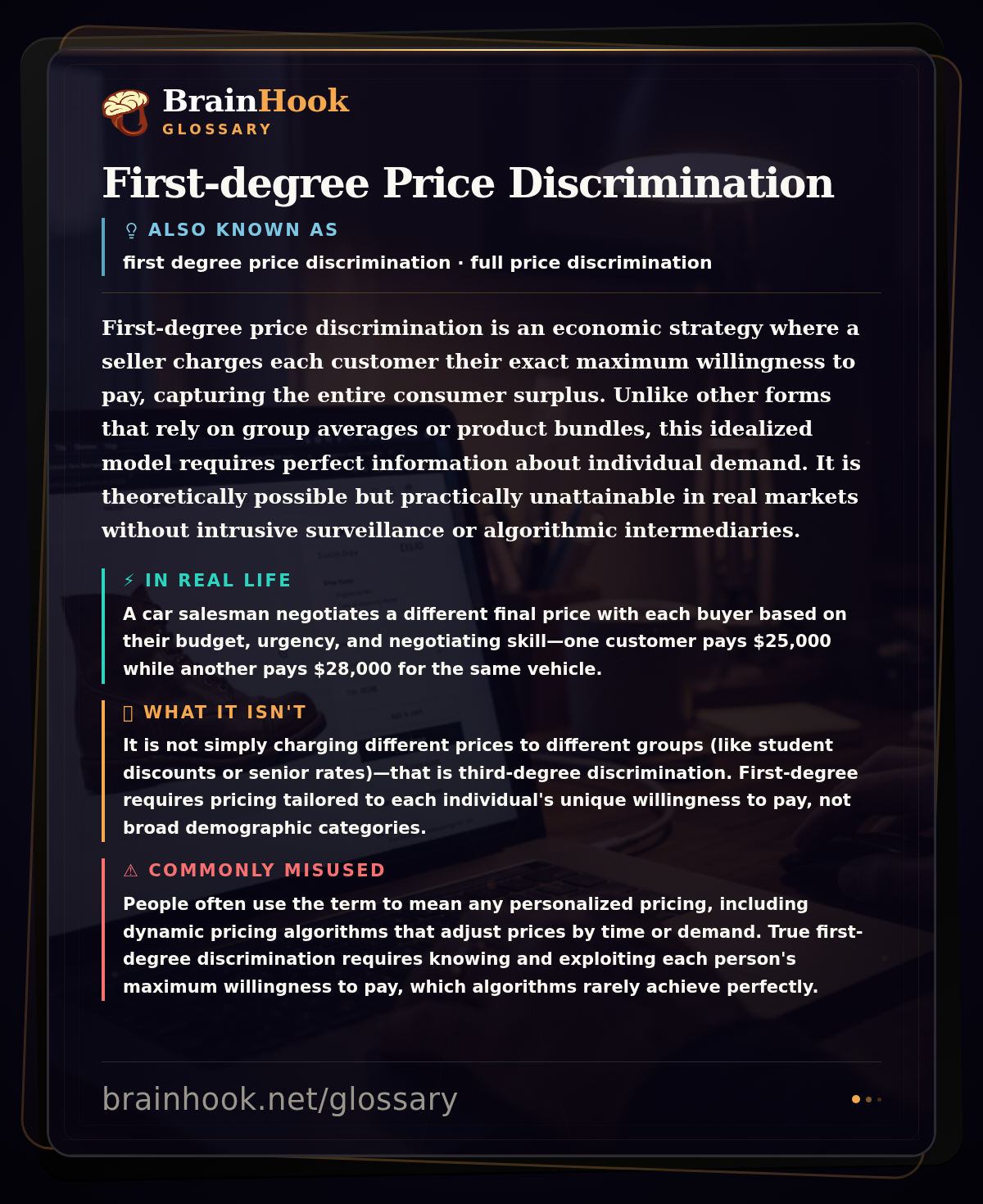
First-degree price discrimination is an economic strategy where a seller charges each customer their exact maximum willingness to pay, capturing the entire consumer surplus. Unlike other forms that rely on group averages or product bundles, this idealized model requires perfect information about individual demand. It is theoretically possible but practically unattainable in real markets without intrusive surveillance or algorithmic intermediaries.
What this means in real life
A car salesman negotiates a different final price with each buyer based on their budget, urgency, and negotiating skill—one customer pays $25,000 while another pays $28,000 for the same vehicle.
What it isn’t
It is not simply charging different prices to different groups (like student discounts or senior rates)—that is third-degree discrimination. First-degree requires pricing tailored to each individual's unique willingness to pay, not broad demographic categories.
Commonly misused online
People often use the term to mean any personalized pricing, including dynamic pricing algorithms that adjust prices by time or demand. True first-degree discrimination requires knowing and exploiting each person's maximum willingness to pay, which algorithms rarely achieve perfectly.
Based on 1 reference source, including government sources. Last verified July 12, 2026.