Financial Imposter Syndrome
A persistent feeling of financial insecurity despite having wealth, where people believe their success is fake or they don't belong in the 'rich' category despite objective evidence.
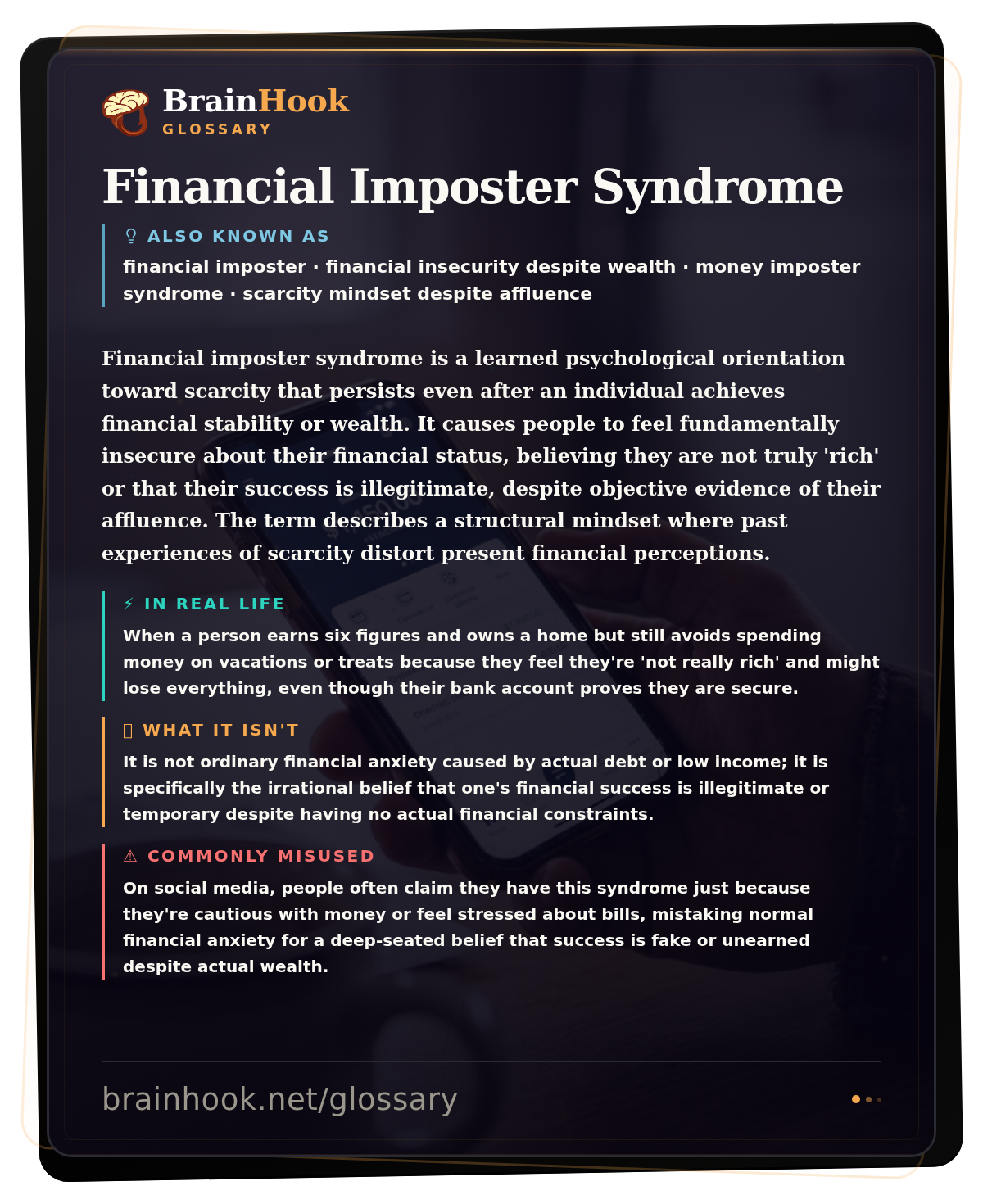
Financial imposter syndrome is a learned psychological orientation toward scarcity that persists even after an individual achieves financial stability or wealth. It causes people to feel fundamentally insecure about their financial status, believing they are not truly 'rich' or that their success is illegitimate, despite objective evidence of their affluence. The term describes a structural mindset where past experiences of scarcity distort present financial perceptions.
What this means in real life
A woman earns a six-figure salary and has built substantial savings, yet feels like a fraud who doesn't deserve her paycheck and fears her boss will discover she's incompetent—so she avoids negotiating raises or making investment decisions.
What it isn’t
It is not actual financial incompetence, poor money habits, or legitimate gaps in knowledge. Someone with this pattern may have excellent financial literacy and track record; the problem is internal doubt, not external reality.
Commonly misused online
Often conflated with general money anxiety or being bad with finances. Social media frames it as a universal relatable feeling rather than a persistent psychological pattern that interferes with financial decision-making.