Expressive Suppression
Holding back the outward signs of what you're feeling—your facial expressions, gestures, or tone—while the emotion itself remains inside.
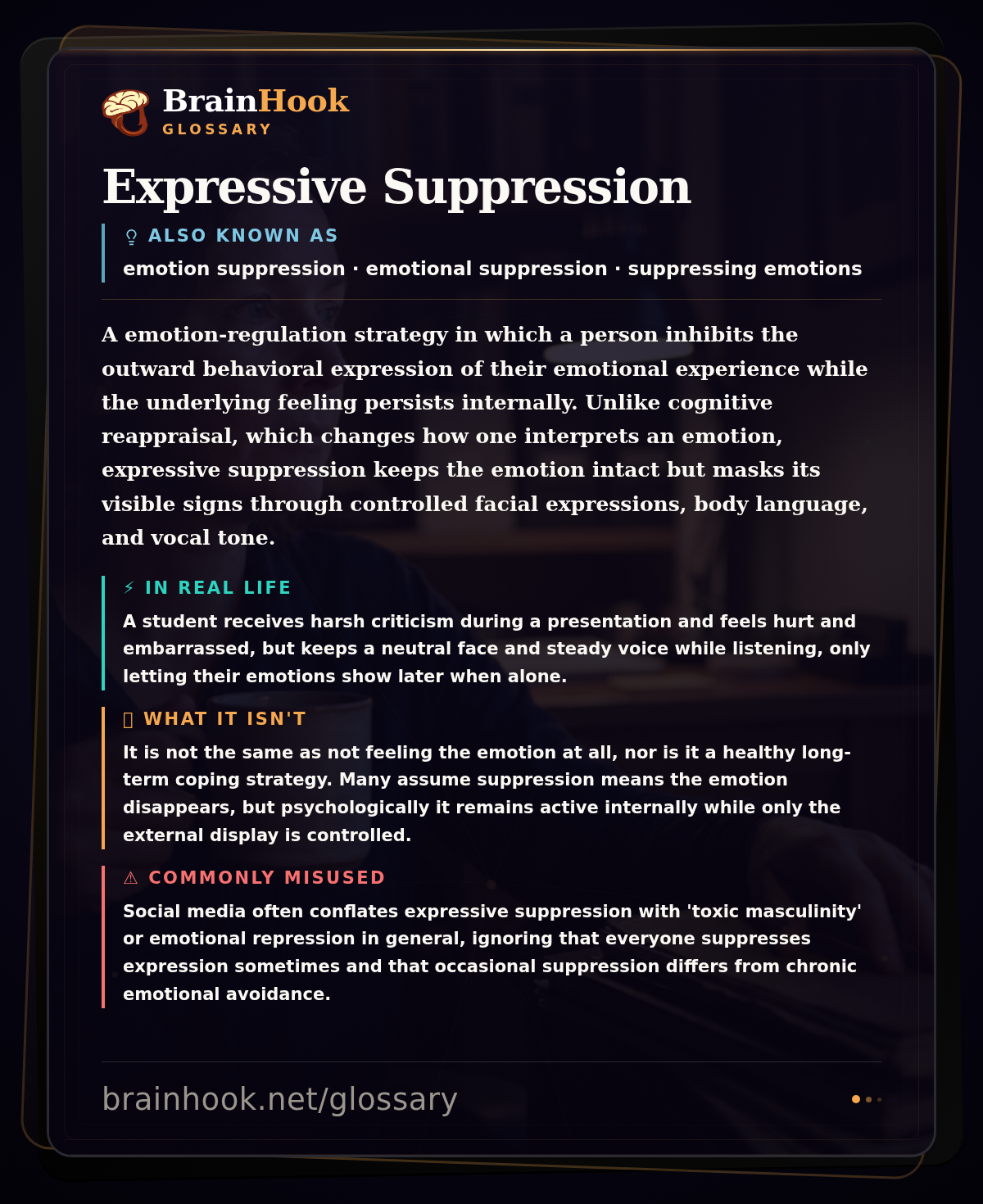
A emotion-regulation strategy in which a person inhibits the outward behavioral expression of their emotional experience while the underlying feeling persists internally. Unlike cognitive reappraisal, which changes how one interprets an emotion, expressive suppression keeps the emotion intact but masks its visible signs through controlled facial expressions, body language, and vocal tone.
What this means in real life
A student receives harsh criticism during a presentation and feels hurt and embarrassed, but keeps a neutral face and steady voice while listening, only letting their emotions show later when alone.
What it isn’t
It is not the same as not feeling the emotion at all, nor is it a healthy long-term coping strategy. Many assume suppression means the emotion disappears, but psychologically it remains active internally while only the external display is controlled.
Commonly misused online
Social media often conflates expressive suppression with 'toxic masculinity' or emotional repression in general, ignoring that everyone suppresses expression sometimes and that occasional suppression differs from chronic emotional avoidance.
Based on 1 reference source, including NIH material. Last verified July 16, 2026.