Experiential Avoidance
Experiential avoidance is the effortful attempt to suppress or escape uncomfortable thoughts and feelings, not just forgetting them. It involves active cognitive work to avoid checking accounts or facing financial reality.
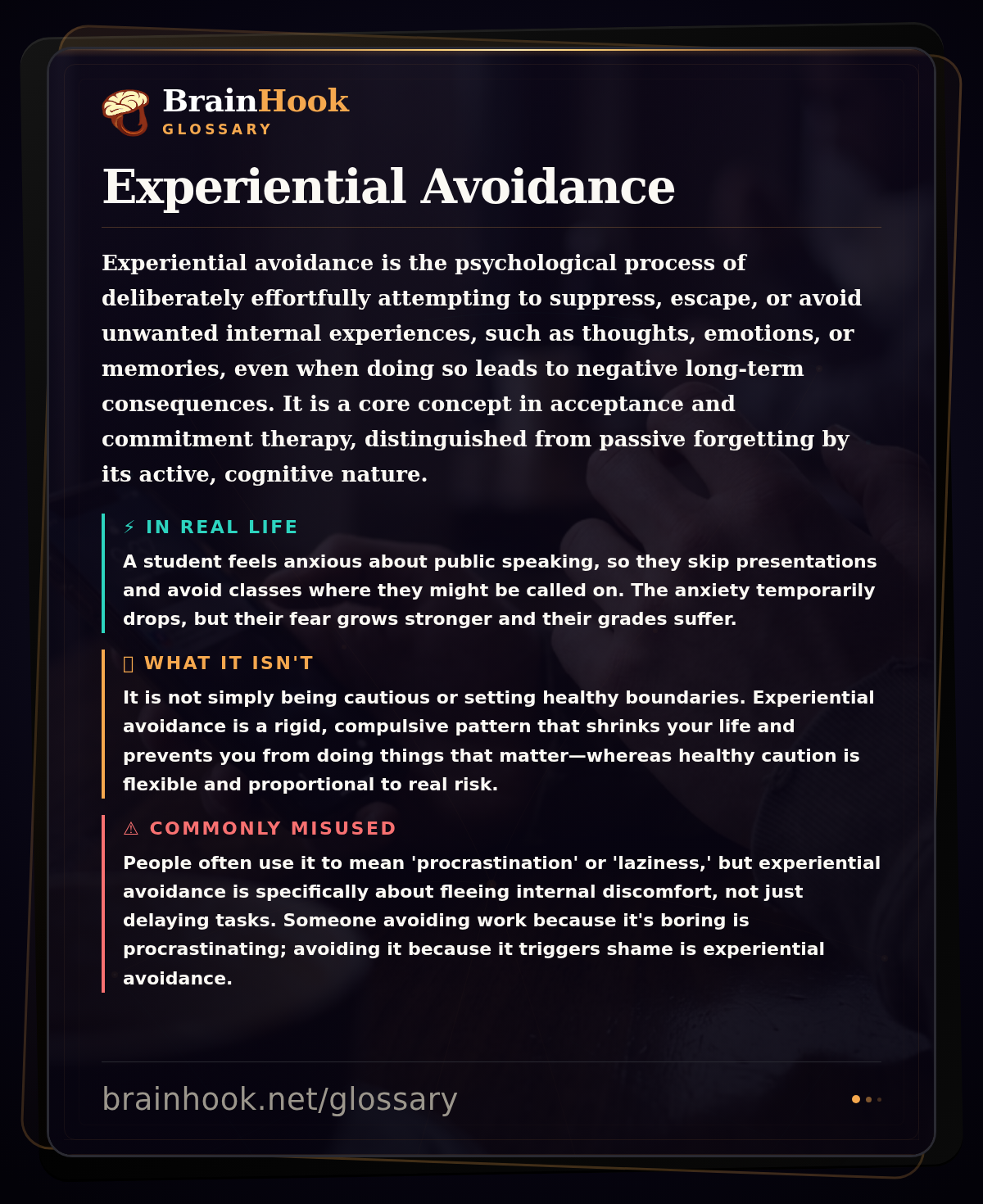
Experiential avoidance is the psychological process of deliberately effortfully attempting to suppress, escape, or avoid unwanted internal experiences, such as thoughts, emotions, or memories, even when doing so leads to negative long-term consequences. It is a core concept in acceptance and commitment therapy, distinguished from passive forgetting by its active, cognitive nature.
What this means in real life
A student feels anxious about public speaking, so they skip presentations and avoid classes where they might be called on. The anxiety temporarily drops, but their fear grows stronger and their grades suffer.
What it isn’t
It is not simply being cautious or setting healthy boundaries. Experiential avoidance is a rigid, compulsive pattern that shrinks your life and prevents you from doing things that matter—whereas healthy caution is flexible and proportional to real risk.
Commonly misused online
People often use it to mean 'procrastination' or 'laziness,' but experiential avoidance is specifically about fleeing internal discomfort, not just delaying tasks. Someone avoiding work because it's boring is procrastinating; avoiding it because it triggers shame is experiential avoidance.