Emotional Orientations
Enduring patterns that shape how people perceive and react to emotional cues, influencing relationships and behavior. Unlike fleeting moods, they reflect deep cognitive-affective dispositions.
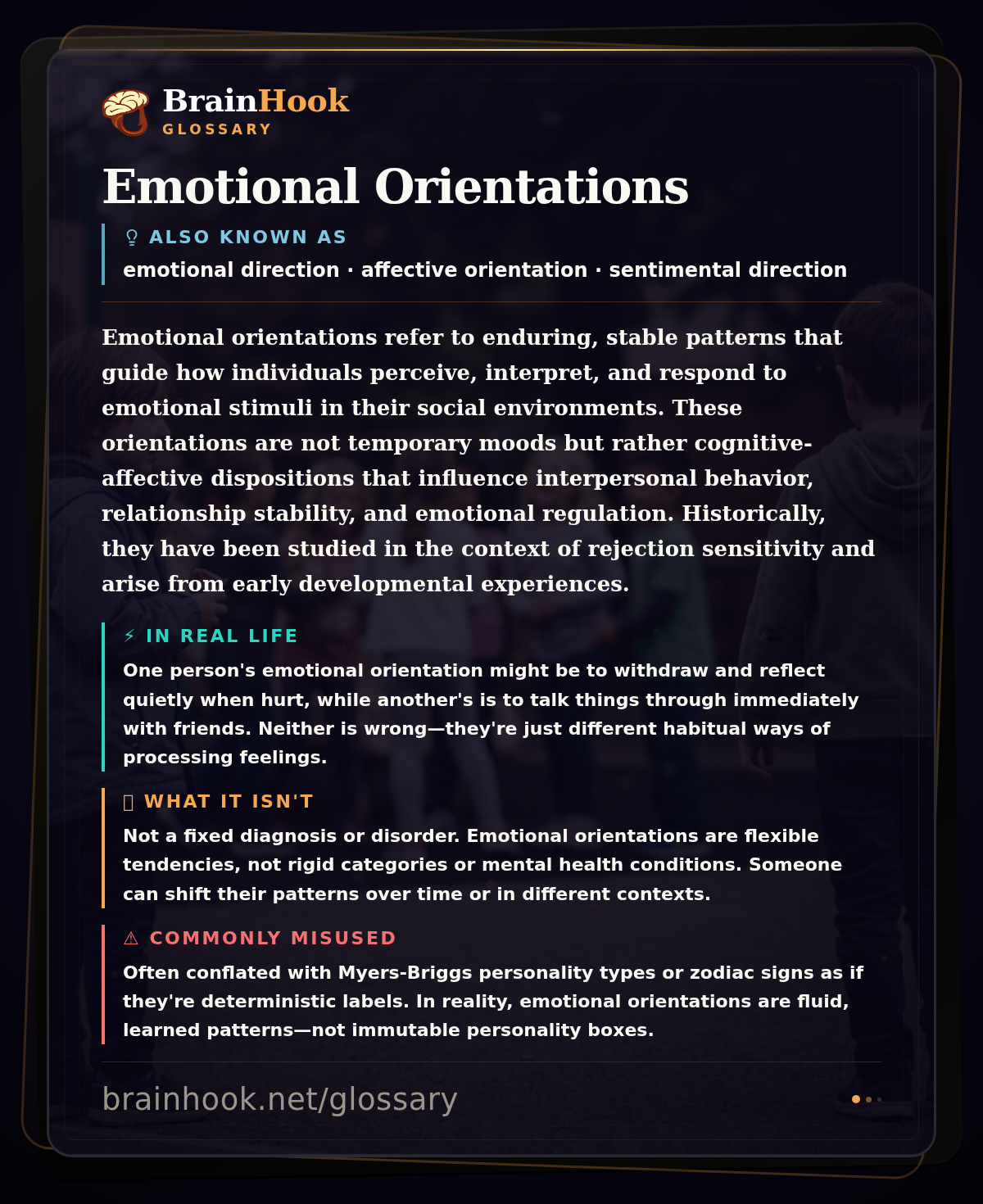
Emotional orientations refer to enduring, stable patterns that guide how individuals perceive, interpret, and respond to emotional stimuli in their social environments. These orientations are not temporary moods but rather cognitive-affective dispositions that influence interpersonal behavior, relationship stability, and emotional regulation. Historically, they have been studied in the context of rejection sensitivity and arise from early developmental experiences.
What this means in real life
One person's emotional orientation might be to withdraw and reflect quietly when hurt, while another's is to talk things through immediately with friends. Neither is wrong—they're just different habitual ways of processing feelings.
What it isn’t
Not a fixed diagnosis or disorder. Emotional orientations are flexible tendencies, not rigid categories or mental health conditions. Someone can shift their patterns over time or in different contexts.
Commonly misused online
Often conflated with Myers-Briggs personality types or zodiac signs as if they're deterministic labels. In reality, emotional orientations are fluid, learned patterns—not immutable personality boxes.