Emotional Mirroring
When a caregiver reflects back a child's emotions—through facial expressions, tone, or words—helping the child recognize and validate their own feelings.
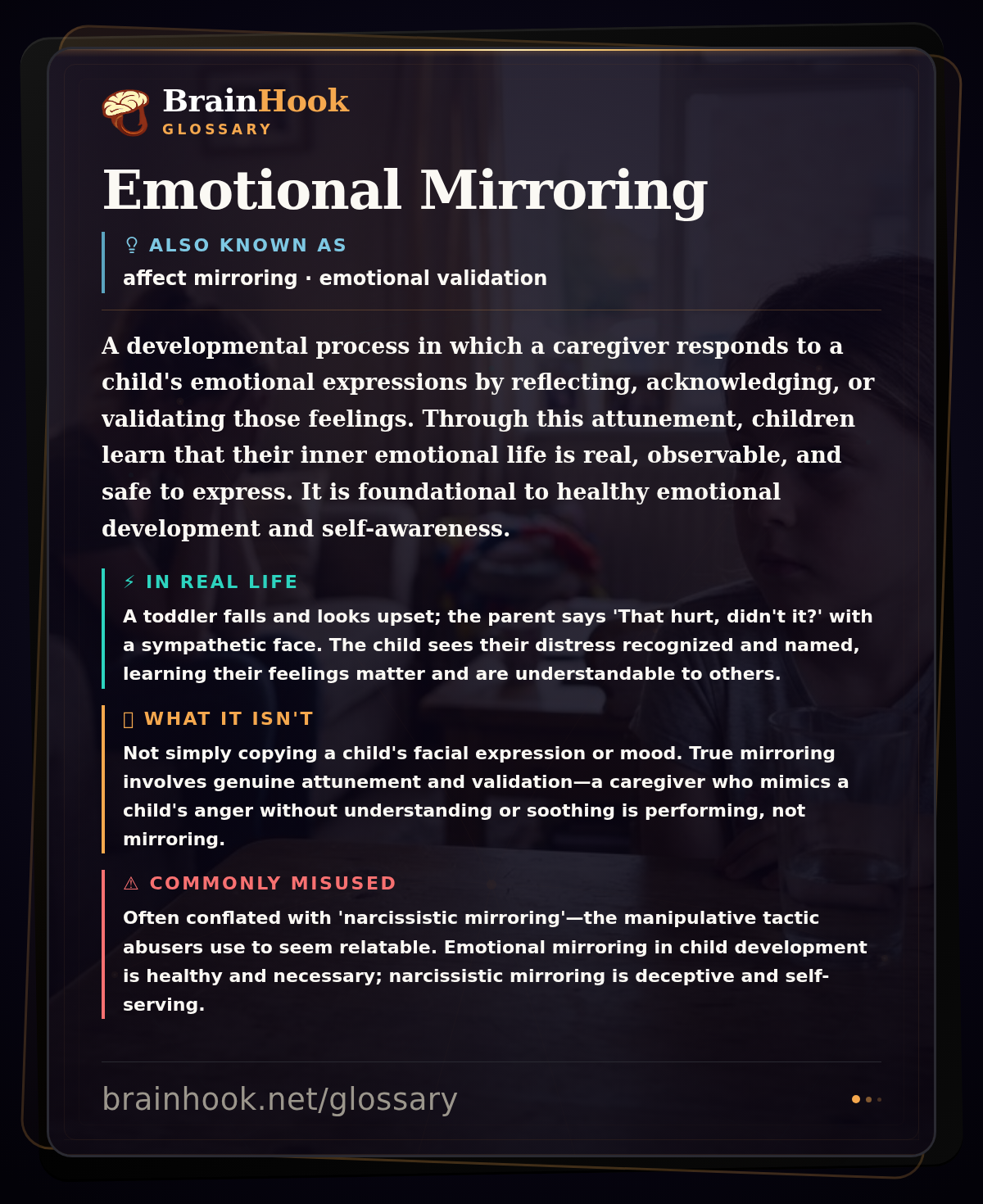
A developmental process in which a caregiver responds to a child's emotional expressions by reflecting, acknowledging, or validating those feelings. Through this attunement, children learn that their inner emotional life is real, observable, and safe to express. It is foundational to healthy emotional development and self-awareness.
What this means in real life
A toddler falls and looks upset; the parent says 'That hurt, didn't it?' with a sympathetic face. The child sees their distress recognized and named, learning their feelings matter and are understandable to others.
What it isn’t
Not simply copying a child's facial expression or mood. True mirroring involves genuine attunement and validation—a caregiver who mimics a child's anger without understanding or soothing is performing, not mirroring.
Commonly misused online
Often conflated with 'narcissistic mirroring'—the manipulative tactic abusers use to seem relatable. Emotional mirroring in child development is healthy and necessary; narcissistic mirroring is deceptive and self-serving.