Decision Fatigue
Repeated or complex choices deplete mental energy, making people default to inaction or the easiest option. It's the exhaustion from too many decisions, not just laziness.
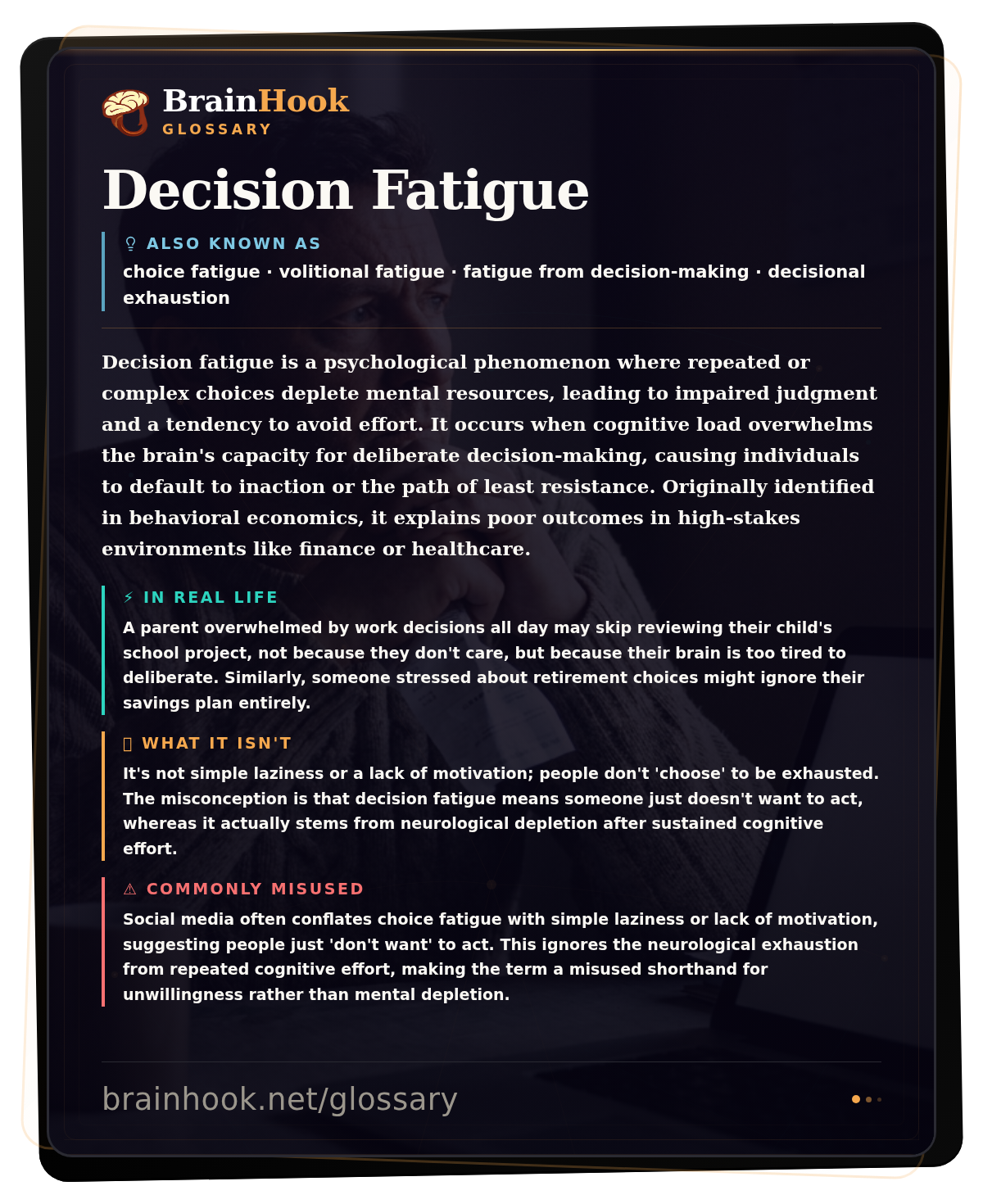
Decision fatigue is a psychological phenomenon where repeated or complex choices deplete mental resources, leading to impaired judgment and a tendency to avoid effort. It occurs when cognitive load overwhelms the brain's capacity for deliberate decision-making, causing individuals to default to inaction or the path of least resistance. Originally identified in behavioral economics, it explains poor outcomes in high-stakes environments like finance or healthcare.
What this means in real life
After choosing what to wear, what to eat, which emails to answer, and which project to prioritize, a manager finds herself unable to make a simple yes-or-no call on a colleague's request—she just says 'I'll think about it' and walks away.
What it isn’t
It is not laziness or lack of willpower. Someone experiencing this is not unwilling to decide; their cognitive resources for deliberation are genuinely depleted, much like muscles after exercise. Rest, not motivation, is the remedy.
Commonly misused online
Social media often frames it as an excuse for any bad choice ('I had decision fatigue, so I bought it'), when the real phenomenon requires sustained, effortful decision-making beforehand—not a single impulsive act.