Deactivating Strategies
Deactivating strategies are psychological defenses where dismissive-avoidant individuals squelch their need for closeness to manage perceived threat from emotional demand or neediness, making closeness feel tolerable rather than eliminating it.
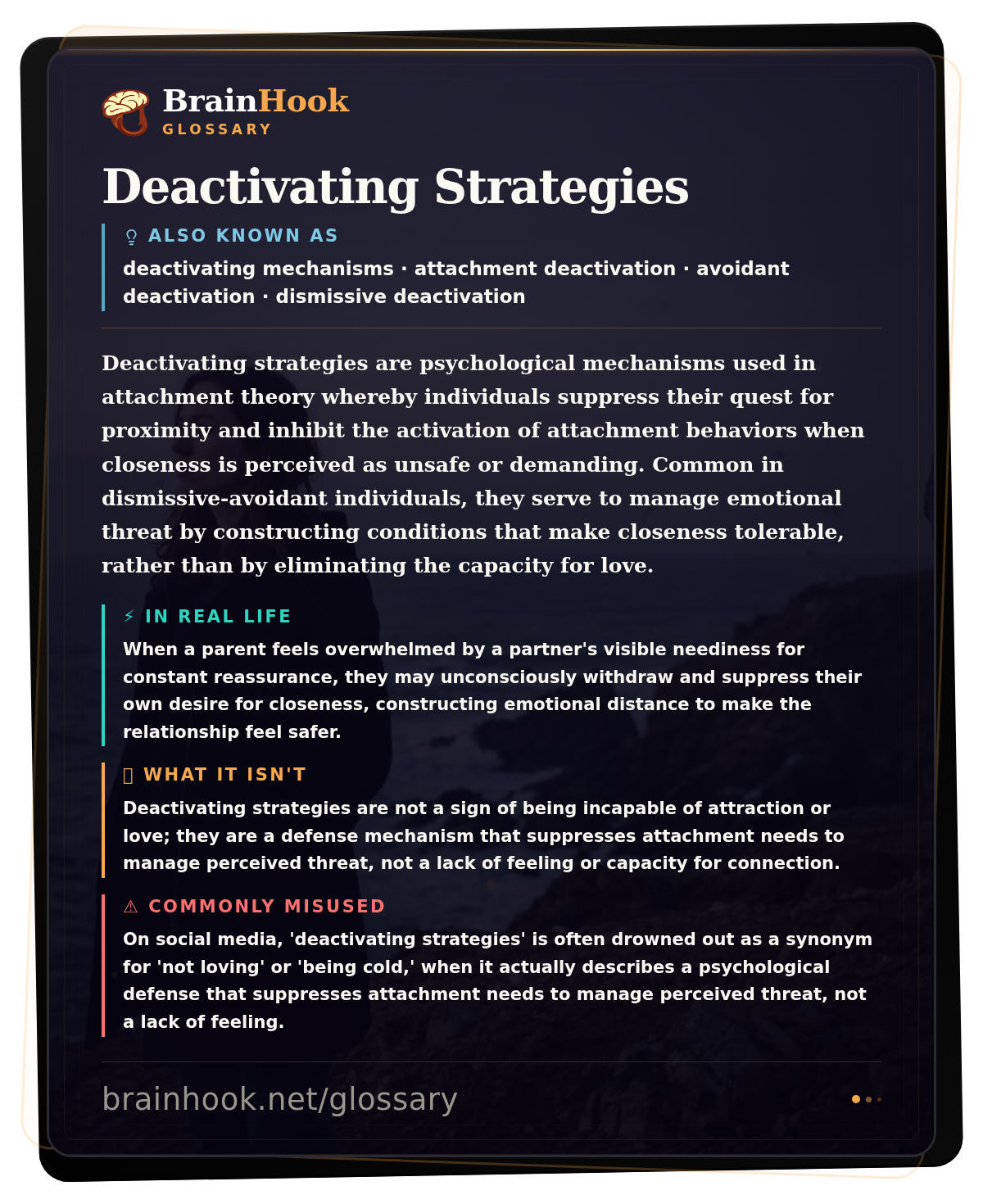
Deactivating strategies are psychological mechanisms used in attachment theory whereby individuals suppress their quest for proximity and inhibit the activation of attachment behaviors when closeness is perceived as unsafe or demanding. Common in dismissive-avoidant individuals, they serve to manage emotional threat by constructing conditions that make closeness tolerable, rather than by eliminating the capacity for love.
What this means in real life
When a partner expresses hurt feelings, someone using deactivating strategies might suddenly focus intently on work, dismiss the concern as 'not a big deal,' or become cold and withdrawn rather than engage in the difficult conversation.
What it isn’t
These are not deliberate manipulation tactics or conscious choices to hurt someone. They're automatic protective responses rooted in early attachment patterns, not intentional cruelty or calculated emotional games.
Commonly misused online
Social media often frames these as simple 'red flags' or signs of a bad person, when they're actually trauma responses that can be recognized and worked through with awareness and support.
Based on 2 reference sources, including primary sources. Last verified July 12, 2026.