Cortisol Reactivity
How strongly your body's stress hormone (cortisol) rises and falls in response to challenging or threatening situations.
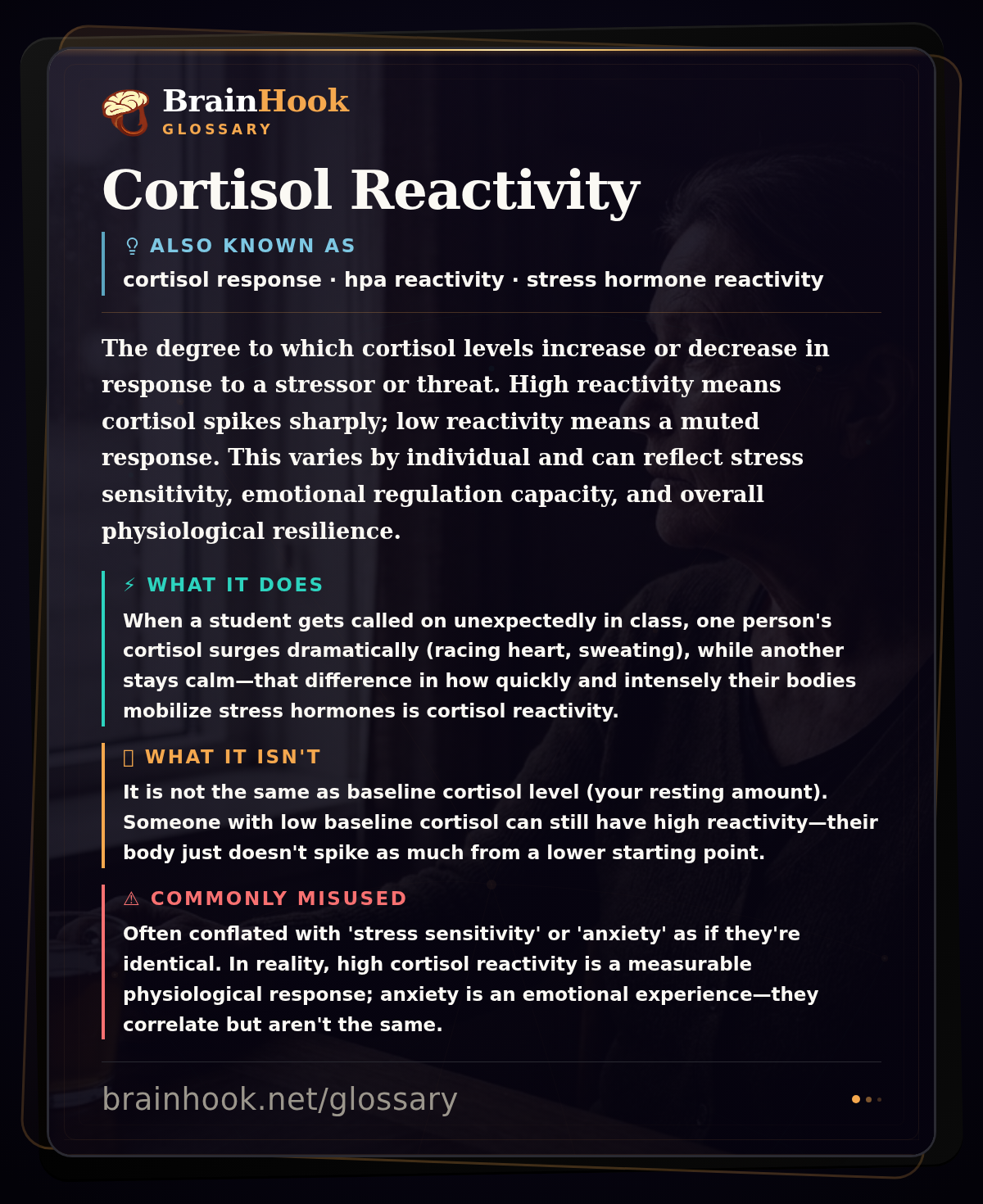
The degree to which cortisol levels increase or decrease in response to a stressor or threat. High reactivity means cortisol spikes sharply; low reactivity means a muted response. This varies by individual and can reflect stress sensitivity, emotional regulation capacity, and overall physiological resilience.
What this means in real life
When a student gets called on unexpectedly in class, one person's cortisol surges dramatically (racing heart, sweating), while another stays calm—that difference in how quickly and intensely their bodies mobilize stress hormones is cortisol reactivity.
What it isn’t
It is not the same as baseline cortisol level (your resting amount). Someone with low baseline cortisol can still have high reactivity—their body just doesn't spike as much from a lower starting point.
Commonly misused online
Often conflated with 'stress sensitivity' or 'anxiety' as if they're identical. In reality, high cortisol reactivity is a measurable physiological response; anxiety is an emotional experience—they correlate but aren't the same.