Compensation Theory
In behavioral science, compensation theory explains how people offset deficits in control or connection by forming parasocial bonds with AI or media figures when direct reciprocity is unavailable.
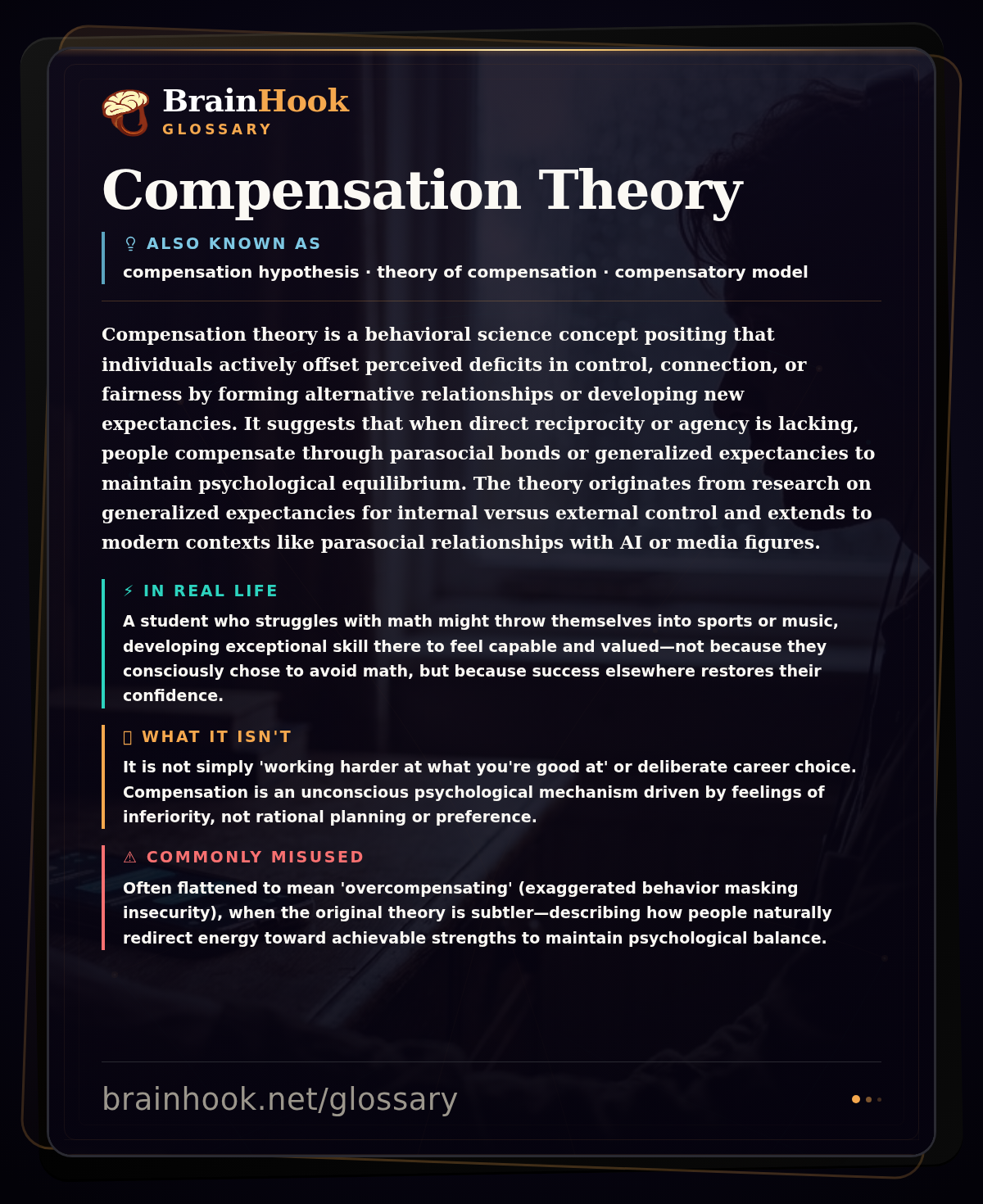
Compensation theory is a behavioral science concept positing that individuals actively offset perceived deficits in control, connection, or fairness by forming alternative relationships or developing new expectancies. It suggests that when direct reciprocity or agency is lacking, people compensate through parasocial bonds or generalized expectancies to maintain psychological equilibrium. The theory originates from research on generalized expectancies for internal versus external control and extends to modern contexts like parasocial relationships with AI or media figures.
What this means in real life
A student who struggles with math might throw themselves into sports or music, developing exceptional skill there to feel capable and valued—not because they consciously chose to avoid math, but because success elsewhere restores their confidence.
What it isn’t
It is not simply 'working harder at what you're good at' or deliberate career choice. Compensation is an unconscious psychological mechanism driven by feelings of inferiority, not rational planning or preference.
Commonly misused online
Often flattened to mean 'overcompensating' (exaggerated behavior masking insecurity), when the original theory is subtler—describing how people naturally redirect energy toward achievable strengths to maintain psychological balance.
Based on 1 reference source, including primary sources. Last verified July 12, 2026.