Cognitive Reserve
The brain's ability to withstand damage and maintain function by using alternative strategies or recruiting different networks, effectively hiding symptoms of disease for longer.
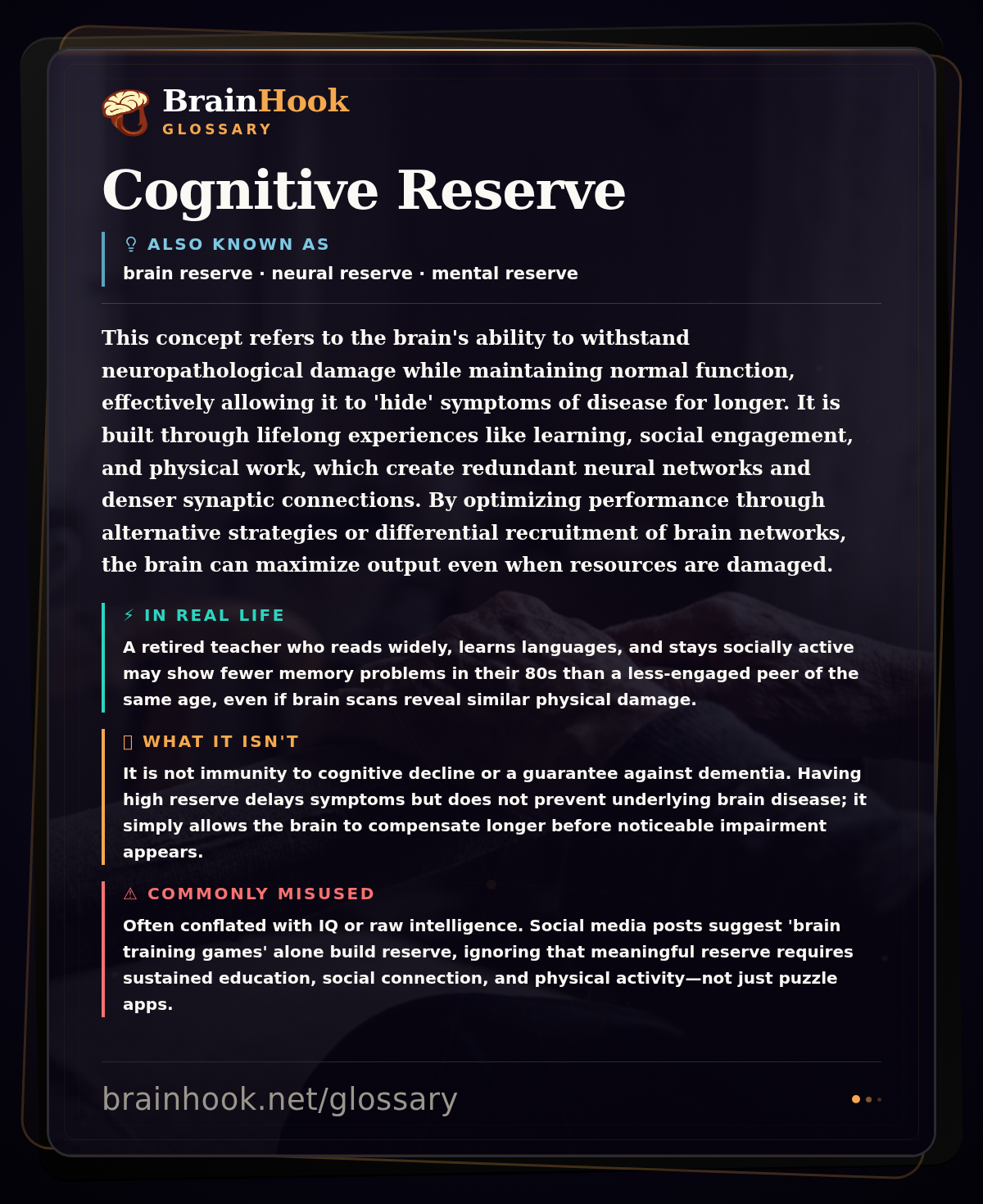
This concept refers to the brain's ability to withstand neuropathological damage while maintaining normal function, effectively allowing it to 'hide' symptoms of disease for longer. It is built through lifelong experiences like learning, social engagement, and physical work, which create redundant neural networks and denser synaptic connections. By optimizing performance through alternative strategies or differential recruitment of brain networks, the brain can maximize output even when resources are damaged.
What this means in real life
A retired teacher who reads widely, learns languages, and stays socially active may show fewer memory problems in their 80s than a less-engaged peer of the same age, even if brain scans reveal similar physical damage.
What it isn’t
It is not immunity to cognitive decline or a guarantee against dementia. Having high reserve delays symptoms but does not prevent underlying brain disease; it simply allows the brain to compensate longer before noticeable impairment appears.
Commonly misused online
Often conflated with IQ or raw intelligence. Social media posts suggest 'brain training games' alone build reserve, ignoring that meaningful reserve requires sustained education, social connection, and physical activity—not just puzzle apps.
Based on 1 reference source, including Wikipedia. Last verified July 11, 2026.