Climate Risk Perception
Climate risk perception is how people weigh distant, probabilistic climate threats against immediate stress, often leading them to deprioritize long-term dangers like rare flood events.
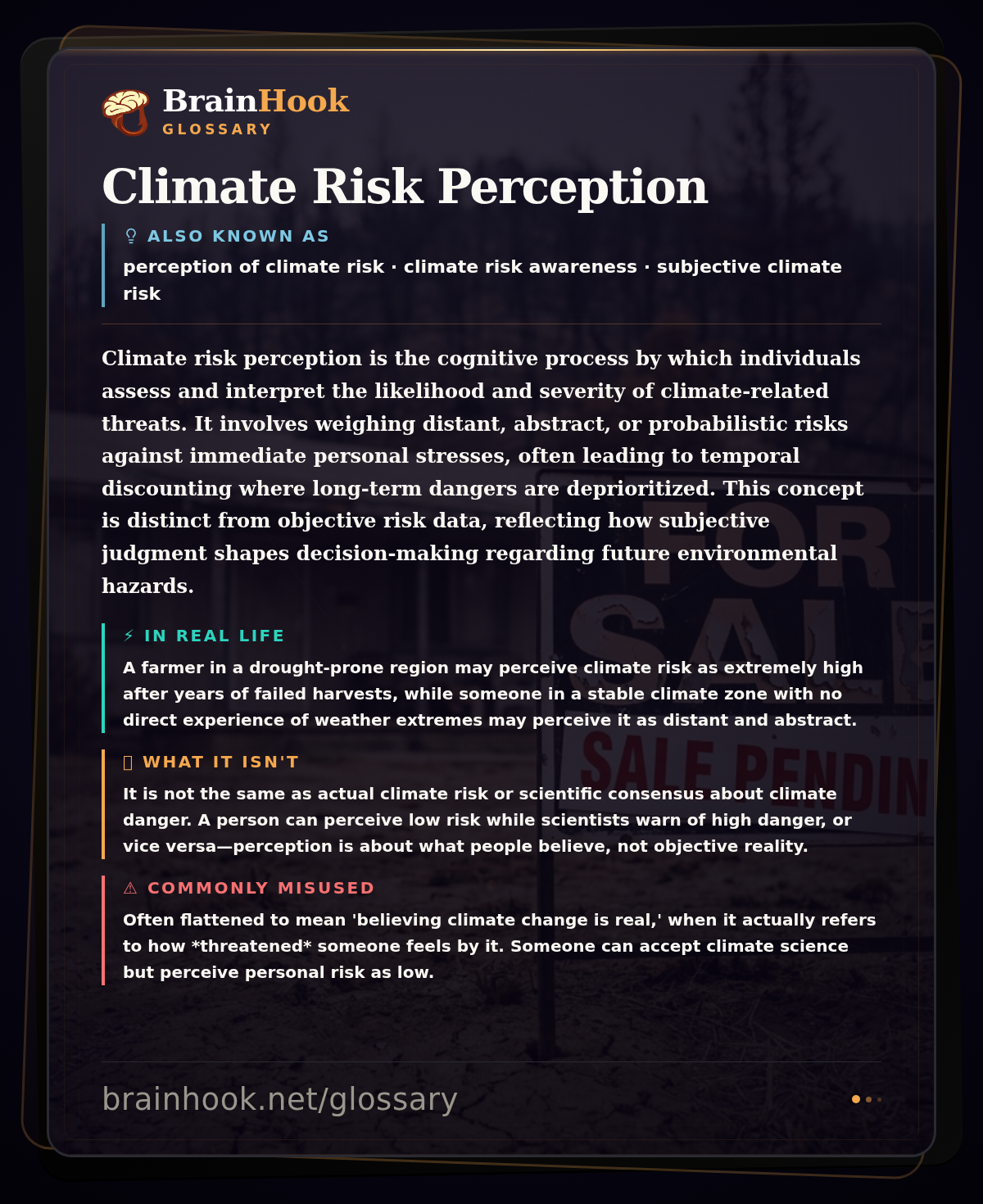
Climate risk perception is the cognitive process by which individuals assess and interpret the likelihood and severity of climate-related threats. It involves weighing distant, abstract, or probabilistic risks against immediate personal stresses, often leading to temporal discounting where long-term dangers are deprioritized. This concept is distinct from objective risk data, reflecting how subjective judgment shapes decision-making regarding future environmental hazards.
What this means in real life
A farmer in a drought-prone region may perceive climate risk as extremely high after years of failed harvests, while someone in a stable climate zone with no direct experience of weather extremes may perceive it as distant and abstract.
What it isn’t
It is not the same as actual climate risk or scientific consensus about climate danger. A person can perceive low risk while scientists warn of high danger, or vice versa—perception is about what people believe, not objective reality.
Commonly misused online
Often flattened to mean 'believing climate change is real,' when it actually refers to how *threatened* someone feels by it. Someone can accept climate science but perceive personal risk as low.