Choice Architecture
The deliberate arrangement of options and information to guide people toward specific choices, often without their conscious awareness.
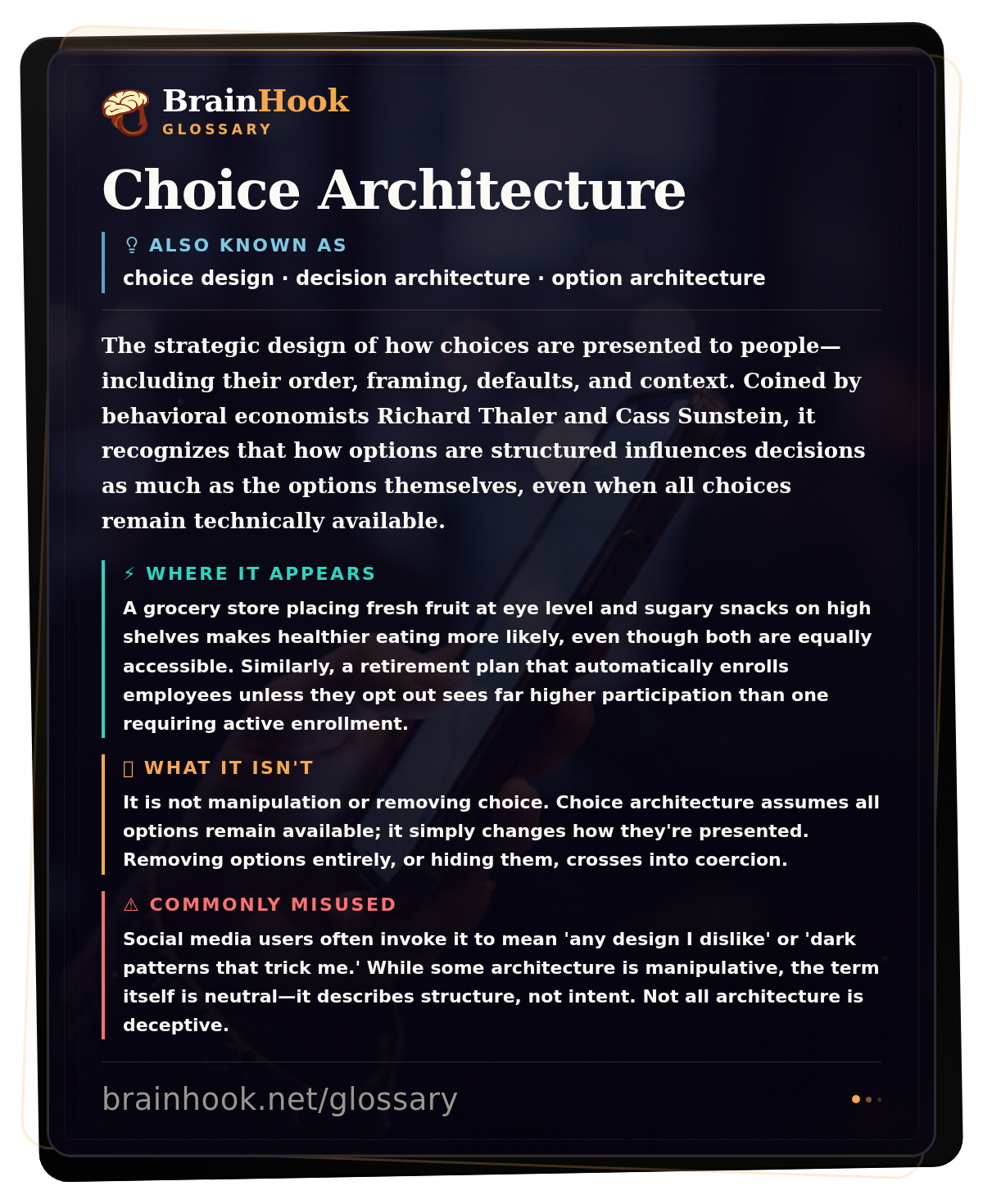
The strategic design of how choices are presented to people—including their order, framing, defaults, and context. Coined by behavioral economists Richard Thaler and Cass Sunstein, it recognizes that how options are structured influences decisions as much as the options themselves, even when all choices remain technically available.
What this means in real life
A grocery store placing fresh fruit at eye level and sugary snacks on high shelves makes healthier eating more likely, even though both are equally accessible. Similarly, a retirement plan that automatically enrolls employees unless they opt out sees far higher participation than one requiring active enrollment.
What it isn’t
It is not manipulation or removing choice. Choice architecture assumes all options remain available; it simply changes how they're presented. Removing options entirely, or hiding them, crosses into coercion.
Commonly misused online
Social media users often invoke it to mean 'any design I dislike' or 'dark patterns that trick me.' While some architecture is manipulative, the term itself is neutral—it describes structure, not intent. Not all architecture is deceptive.