Cascading Trophic Effects
Ripple effects through a food chain when one species changes, affecting predators, prey, and entire ecosystems in unexpected ways.
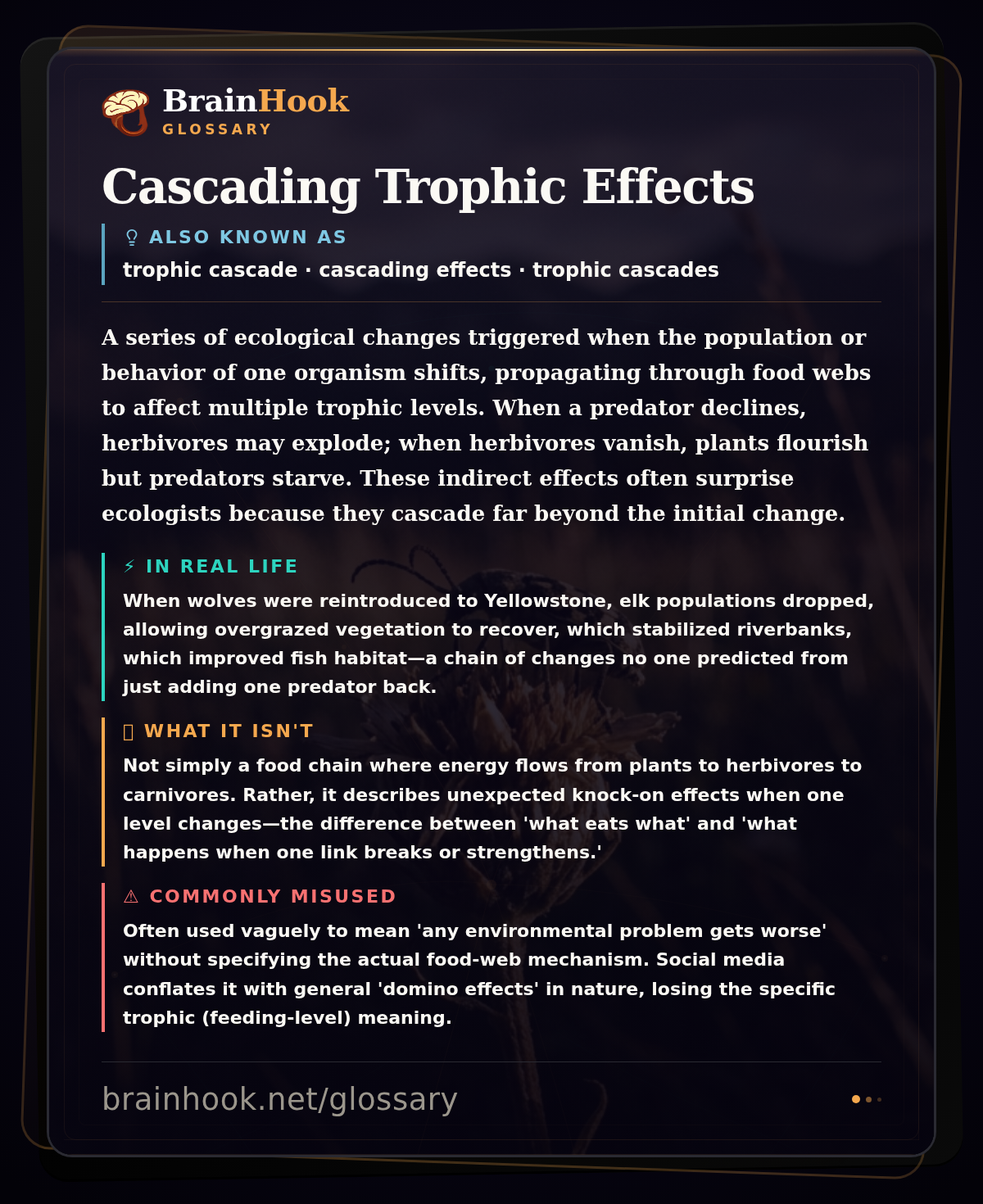
A series of ecological changes triggered when the population or behavior of one organism shifts, propagating through food webs to affect multiple trophic levels. When a predator declines, herbivores may explode; when herbivores vanish, plants flourish but predators starve. These indirect effects often surprise ecologists because they cascade far beyond the initial change.
What this means in real life
When wolves were reintroduced to Yellowstone, elk populations dropped, allowing overgrazed vegetation to recover, which stabilized riverbanks, which improved fish habitat—a chain of changes no one predicted from just adding one predator back.
What it isn’t
Not simply a food chain where energy flows from plants to herbivores to carnivores. Rather, it describes unexpected knock-on effects when one level changes—the difference between 'what eats what' and 'what happens when one link breaks or strengthens.'
Commonly misused online
Often used vaguely to mean 'any environmental problem gets worse' without specifying the actual food-web mechanism. Social media conflates it with general 'domino effects' in nature, losing the specific trophic (feeding-level) meaning.