Avoidant Coping
Avoidant coping is when someone evades emotional distress by withdrawing from real interactions, often favoring faster, zero-risk alternatives like AI chatbots to suppress feelings instead of processing them.
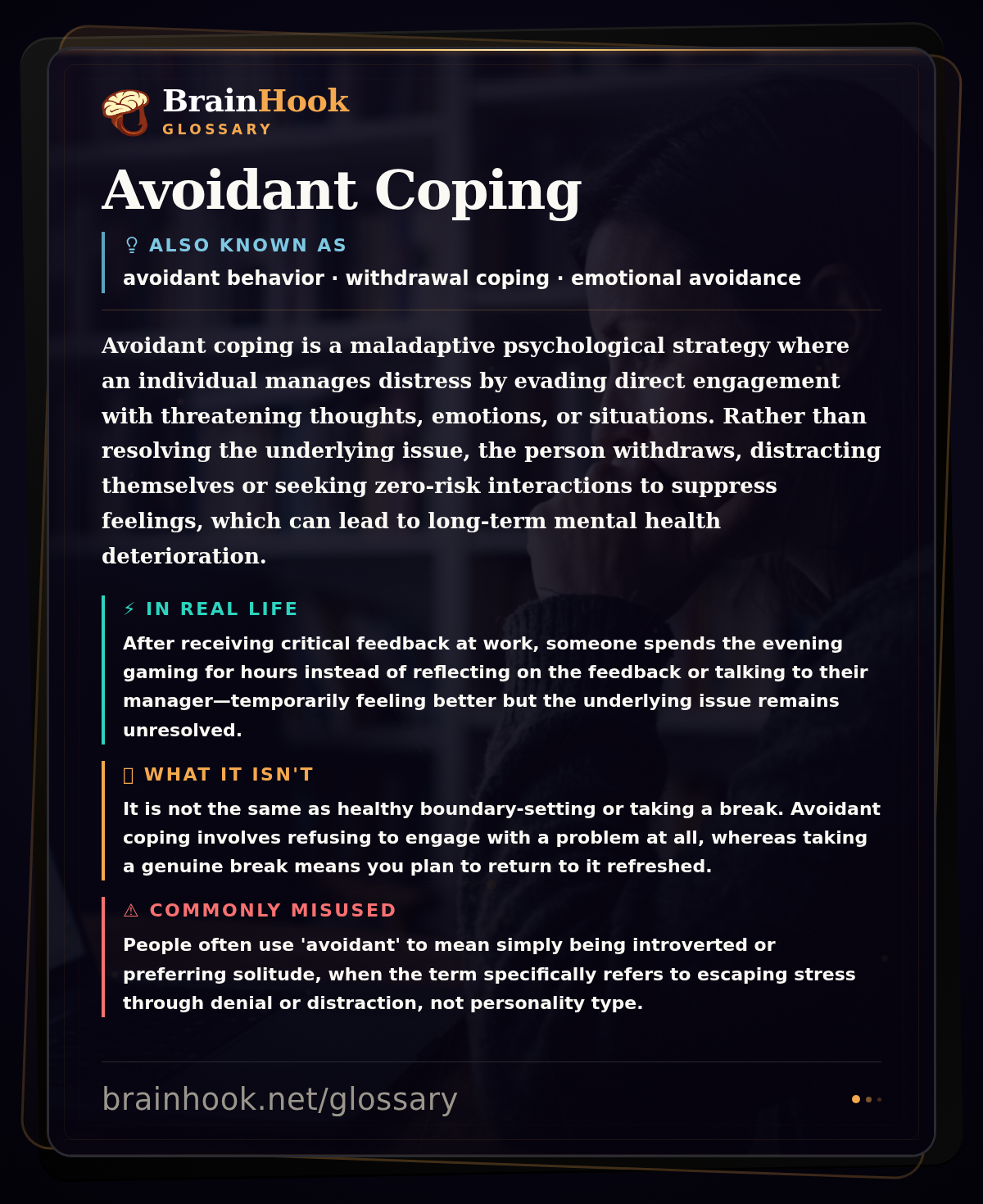
Avoidant coping is a maladaptive psychological strategy where an individual manages distress by evading direct engagement with threatening thoughts, emotions, or situations. Rather than resolving the underlying issue, the person withdraws, distracting themselves or seeking zero-risk interactions to suppress feelings, which can lead to long-term mental health deterioration.
What this means in real life
After receiving critical feedback at work, someone spends the evening gaming for hours instead of reflecting on the feedback or talking to their manager—temporarily feeling better but the underlying issue remains unresolved.
What it isn’t
It is not the same as healthy boundary-setting or taking a break. Avoidant coping involves refusing to engage with a problem at all, whereas taking a genuine break means you plan to return to it refreshed.
Commonly misused online
People often use 'avoidant' to mean simply being introverted or preferring solitude, when the term specifically refers to escaping stress through denial or distraction, not personality type.