Asymmetric Information
When one party in a deal knows more than the other, creating an imbalance that can扭曲 markets—like when sellers hide flaws or governments withhold data.
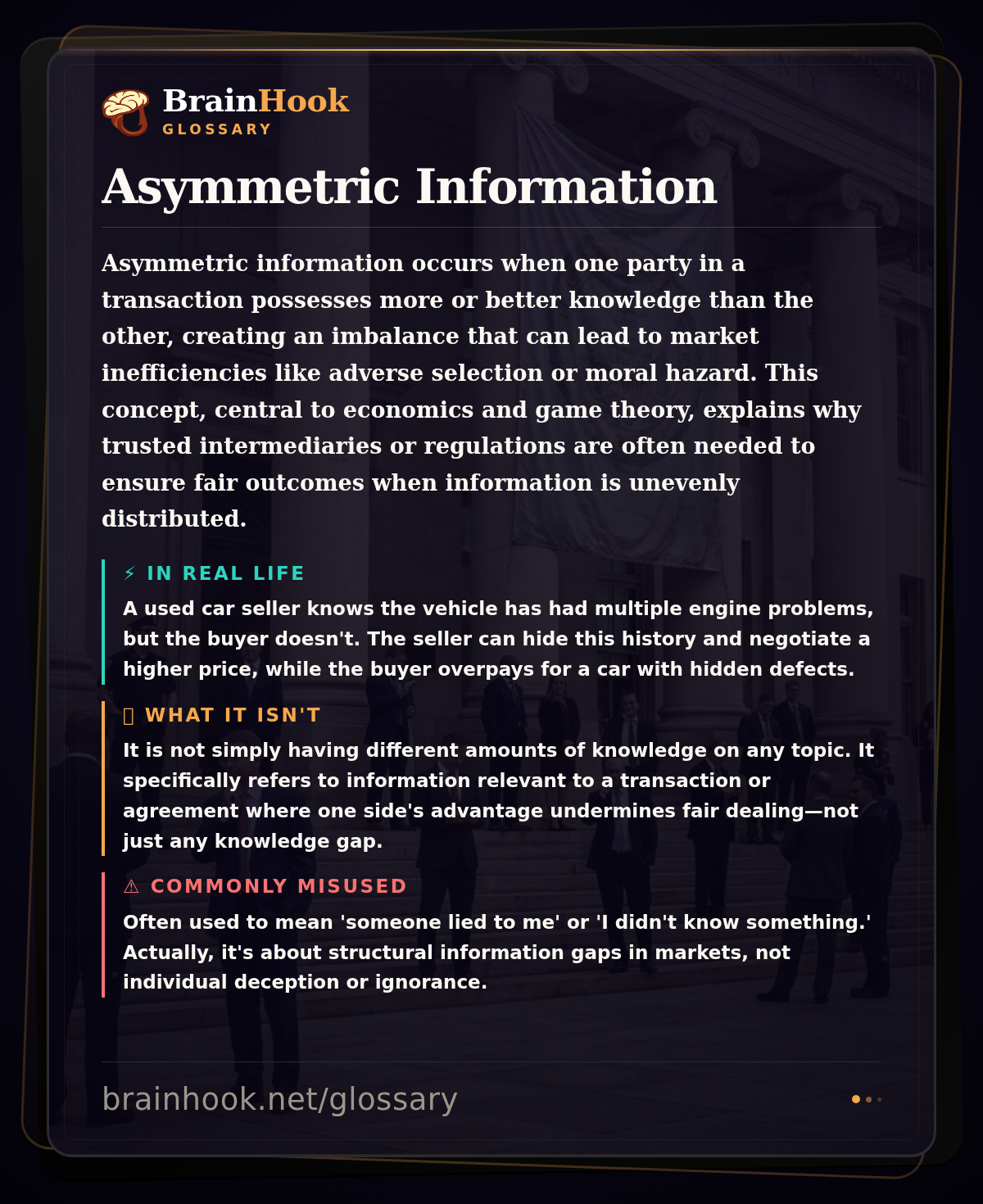
Asymmetric information occurs when one party in a transaction possesses more or better knowledge than the other, creating an imbalance that can lead to market inefficiencies like adverse selection or moral hazard. This concept, central to economics and game theory, explains why trusted intermediaries or regulations are often needed to ensure fair outcomes when information is unevenly distributed.
What this means in real life
A used car seller knows the vehicle has had multiple engine problems, but the buyer doesn't. The seller can hide this history and negotiate a higher price, while the buyer overpays for a car with hidden defects.
What it isn’t
It is not simply having different amounts of knowledge on any topic. It specifically refers to information relevant to a transaction or agreement where one side's advantage undermines fair dealing—not just any knowledge gap.
Commonly misused online
Often used to mean 'someone lied to me' or 'I didn't know something.' Actually, it's about structural information gaps in markets, not individual deception or ignorance.