Ambient Anxiety
This is the constant, low-level hum of worry that exists without a specific trigger, acting as a background tension in daily life rather than a sudden spike of panic.
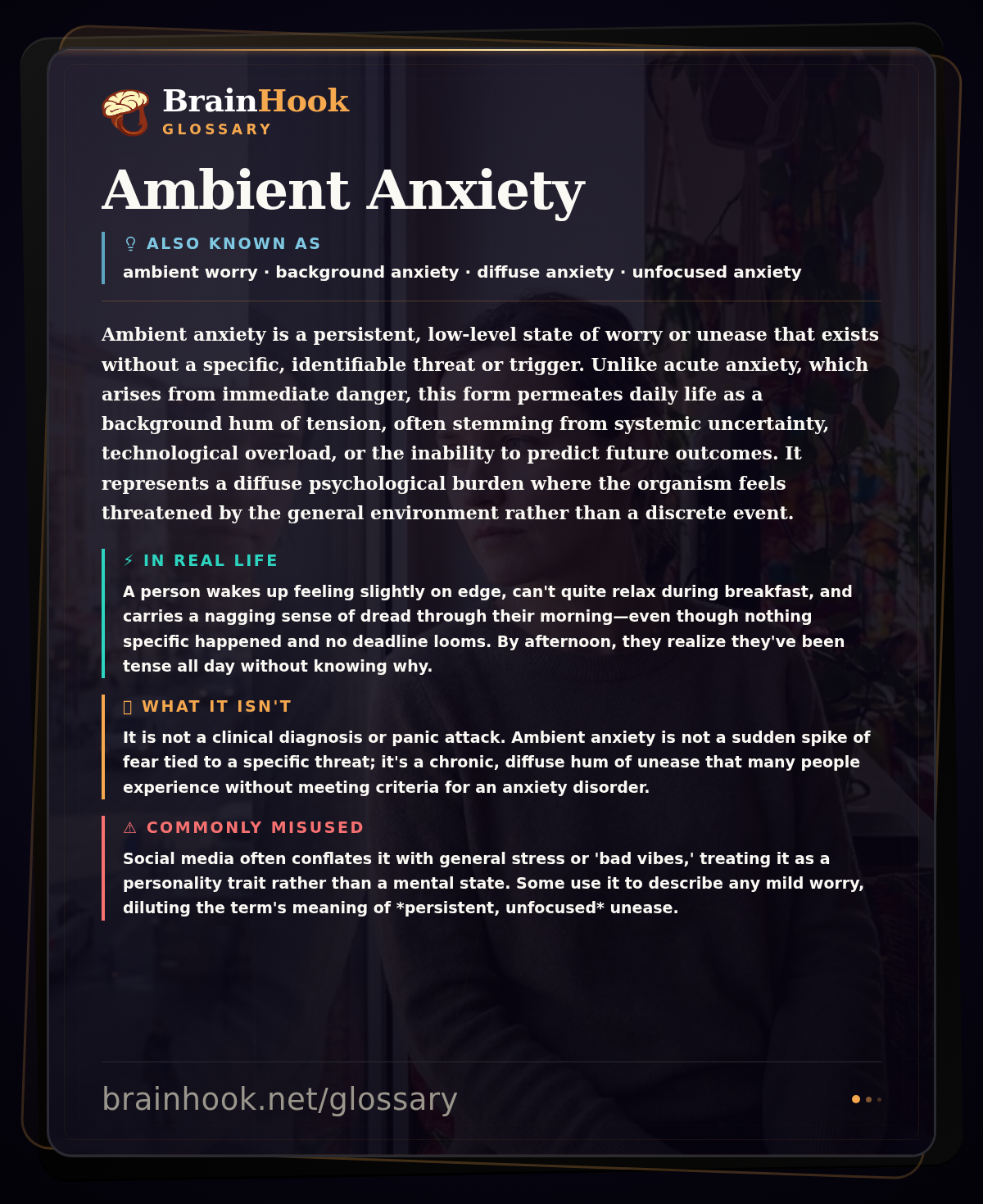
Ambient anxiety is a persistent, low-level state of worry or unease that exists without a specific, identifiable threat or trigger. Unlike acute anxiety, which arises from immediate danger, this form permeates daily life as a background hum of tension, often stemming from systemic uncertainty, technological overload, or the inability to predict future outcomes. It represents a diffuse psychological burden where the organism feels threatened by the general environment rather than a discrete event.
What this means in real life
A person wakes up feeling slightly on edge, can't quite relax during breakfast, and carries a nagging sense of dread through their morning—even though nothing specific happened and no deadline looms. By afternoon, they realize they've been tense all day without knowing why.
What it isn’t
It is not a clinical diagnosis or panic attack. Ambient anxiety is not a sudden spike of fear tied to a specific threat; it's a chronic, diffuse hum of unease that many people experience without meeting criteria for an anxiety disorder.
Commonly misused online
Social media often conflates it with general stress or 'bad vibes,' treating it as a personality trait rather than a mental state. Some use it to describe any mild worry, diluting the term's meaning of *persistent, unfocused* unease.
Based on 1 reference source, including primary sources. Last verified July 12, 2026.