Allostatic Load
Allostatic load is the body's cumulative wear from chronic stress, where repeated attempts to stay stable damage regulatory systems like cortisol and heart function. It's the long-term cost of adapting to ongoing pressure.
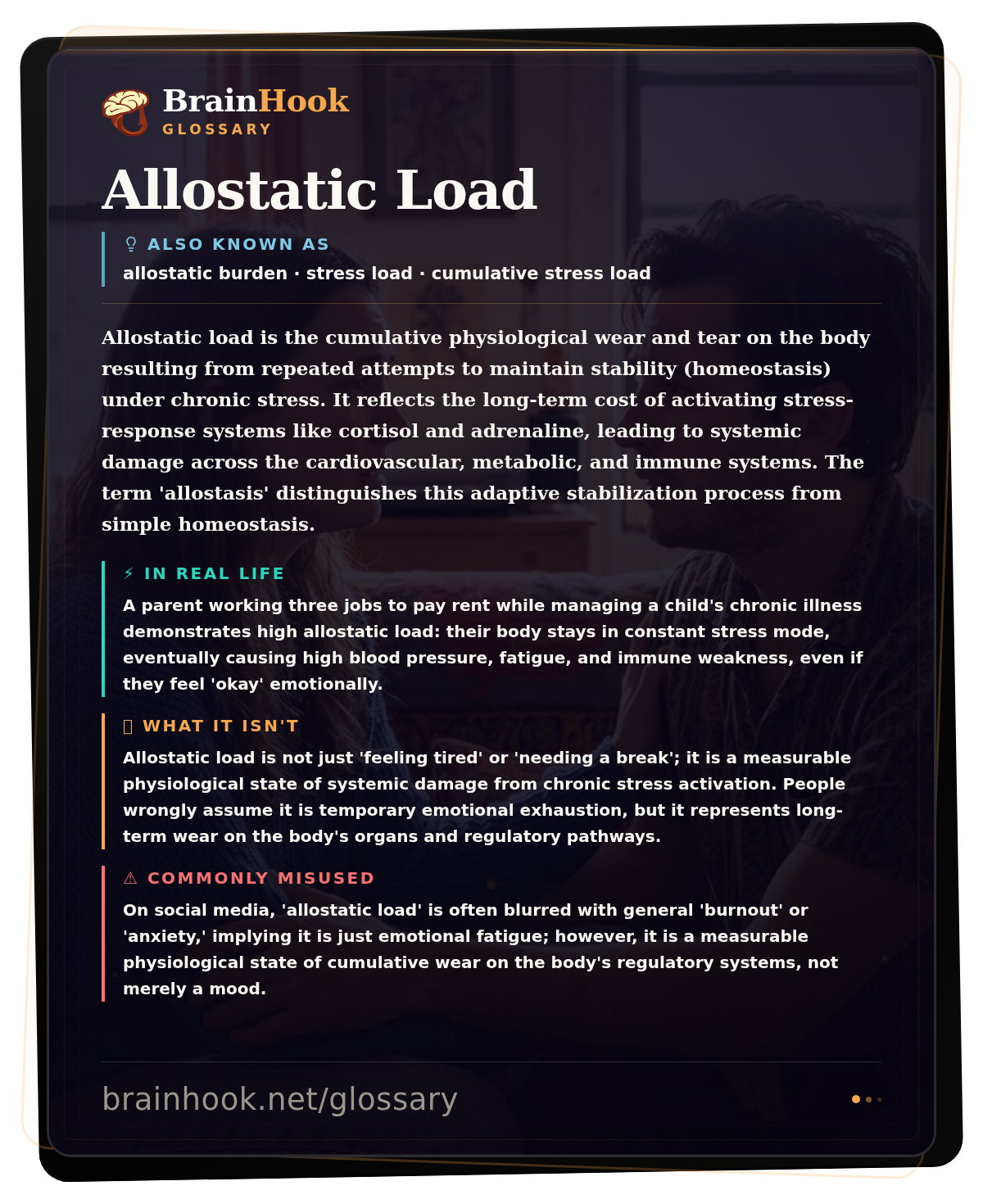
Allostatic load is the cumulative physiological wear and tear on the body resulting from repeated attempts to maintain stability (homeostasis) under chronic stress. It reflects the long-term cost of activating stress-response systems like cortisol and adrenaline, leading to systemic damage across the cardiovascular, metabolic, and immune systems. The term 'allostasis' distinguishes this adaptive stabilization process from simple homeostasis.
What this means in real life
A person working two jobs with irregular sleep, skipped meals, and financial worry experiences elevated cortisol, higher blood pressure, and weakened immunity—their body is constantly in overdrive trying to cope, leaving them exhausted and more prone to illness.
What it isn’t
It is not simply feeling stressed or tired. Allostatic load is the measurable biological damage accumulating inside your body from sustained stress—you can feel fine while your cardiovascular and immune systems are already wearing down.
Commonly misused online
Often conflated with 'stress' itself, when it actually refers to the hidden physiological cost of stress—people tweet 'my allostatic load is high' when they mean 'I'm stressed,' missing that the term describes biological markers, not feelings.